Few upgrades give you more impact for less money than repainting your front door. It is the first thing visitors notice, the full stop on your facade, and one weekend’s work can lift a tired entrance into a genuine talking point. Choosing the right front door colours — or front door color, if that’s how you’ve typed it into Google — is where most people freeze, though. There are hundreds of shades, and a colour that looks confident on a swatch can fall flat against your brick, render or weatherboard. This guide walks through the front door colours making the biggest impression on Australian homes in 2026, what mood each one sets, the kinds of houses they suit best, and a real Dulux pick to start you off. We have leaned on the latest Australian colour forecasts and 15 years of painting Melbourne homes, so you can shortlist with confidence instead of guesswork. If a full facade refresh is on the cards too, our guide to exterior painting in Melbourne is a useful companion.
Front Door Colours at a Glance
| Colour | Mood | Best Suited To | Dulux Pick |
|---|---|---|---|
| Charcoal / Black | Timeless, modern, architectural | Contemporary builds and period homes alike | Dulux Monument |
| Navy / Deep Blue | Classic, welcoming | Weatherboard cottages, Hamptons-style and brick homes | Dulux Deep Aqua |
| Green | Fresh, grounded — the new neutral | Red brick, natural stone, leafy gardens | Dulux Deep Brunswick Green |
| Terracotta / Clay | Warm, sophisticated — 2026’s standout | Rendered facades, mid-century and timber-and-stone homes | Warm terracotta/clay tones |
| Burgundy / Deep Red | Grown-up warmth, refined | Victorian terraces and period homes | Deep burgundy/plum tones |
| White / Soft Neutral | Clean, understated elegance | Hamptons, coastal and traditional homes | Dulux Natural White |
| Yellow / Bold Accent | Cheerful, unmistakably yours | Restrained facades in charcoal, white or stone | A confident, saturated yellow |
Why Your Front Door Colour Matters More Than You Think
A front door is small, but it carries enormous visual weight. Painted well, it draws the eye, frames your entrance and signals that the home is cared for — which matters whether you are welcoming guests or styling for sale. Because the area is so small, it is also low-risk: a litre or two of premium exterior enamel and an afternoon is all it takes to test a bolder idea than you would ever try on the whole house. That is exactly why doors have become the place Australians experiment with colour while keeping walls and trims calm.
Charcoal and Black: The Timeless Choice
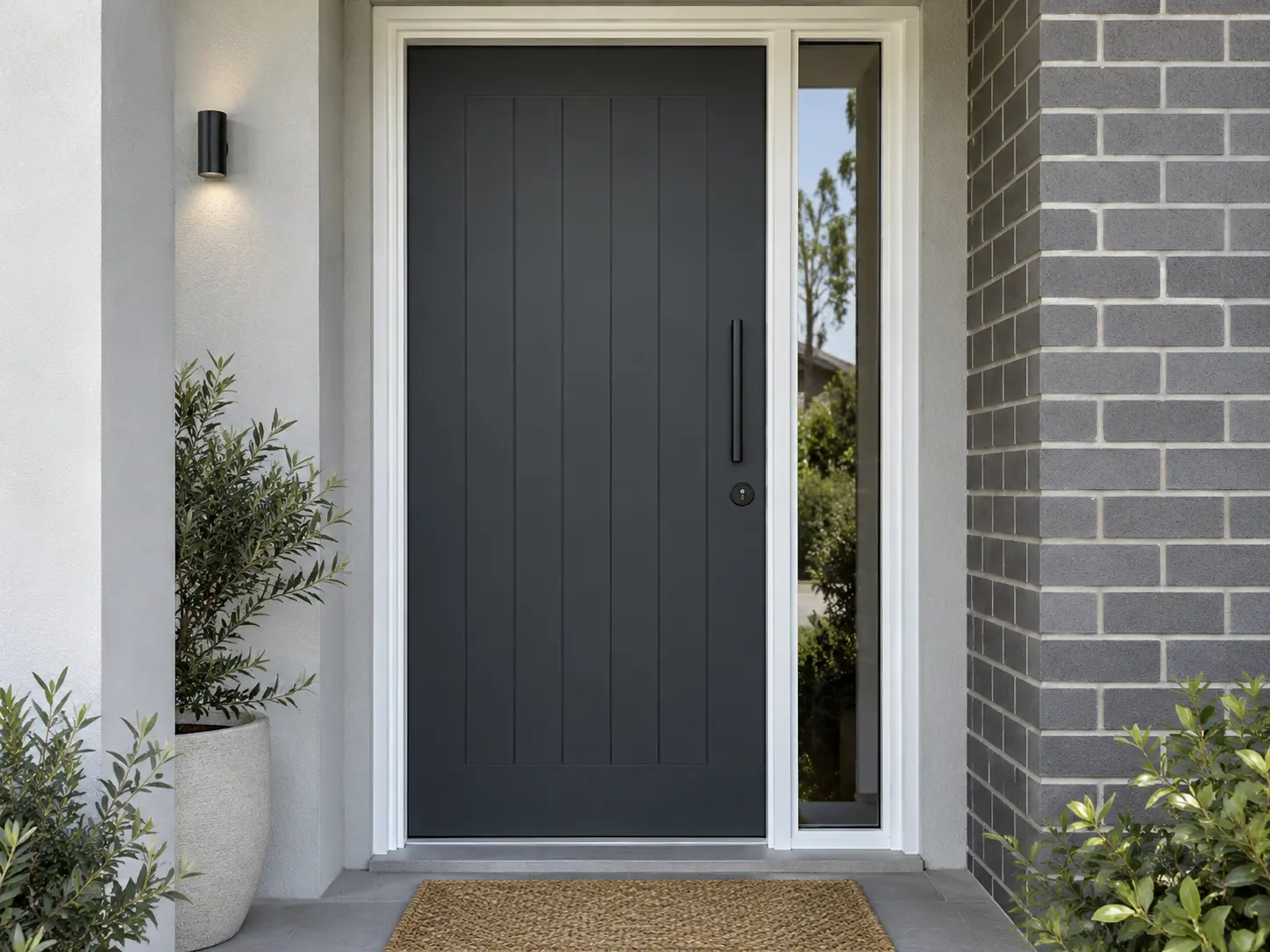
If you want a colour that will still look right in ten years, a deep charcoal or soft black is hard to beat. It reads as modern and architectural on contemporary builds, yet sits comfortably on heritage homes too, lending weight and elegance to period detail. Charcoal hides marks and weathers gracefully, which is a practical bonus on a high-traffic door. Dulux Monument is the go-to Australian charcoal, while a near-black like Dulux Domino suits anyone wanting drama without stark jet black. Pair it with crisp white trims for contrast, or warm timber for a softer, mid-century feel.
Navy and Deep Blue: Classic and Welcoming
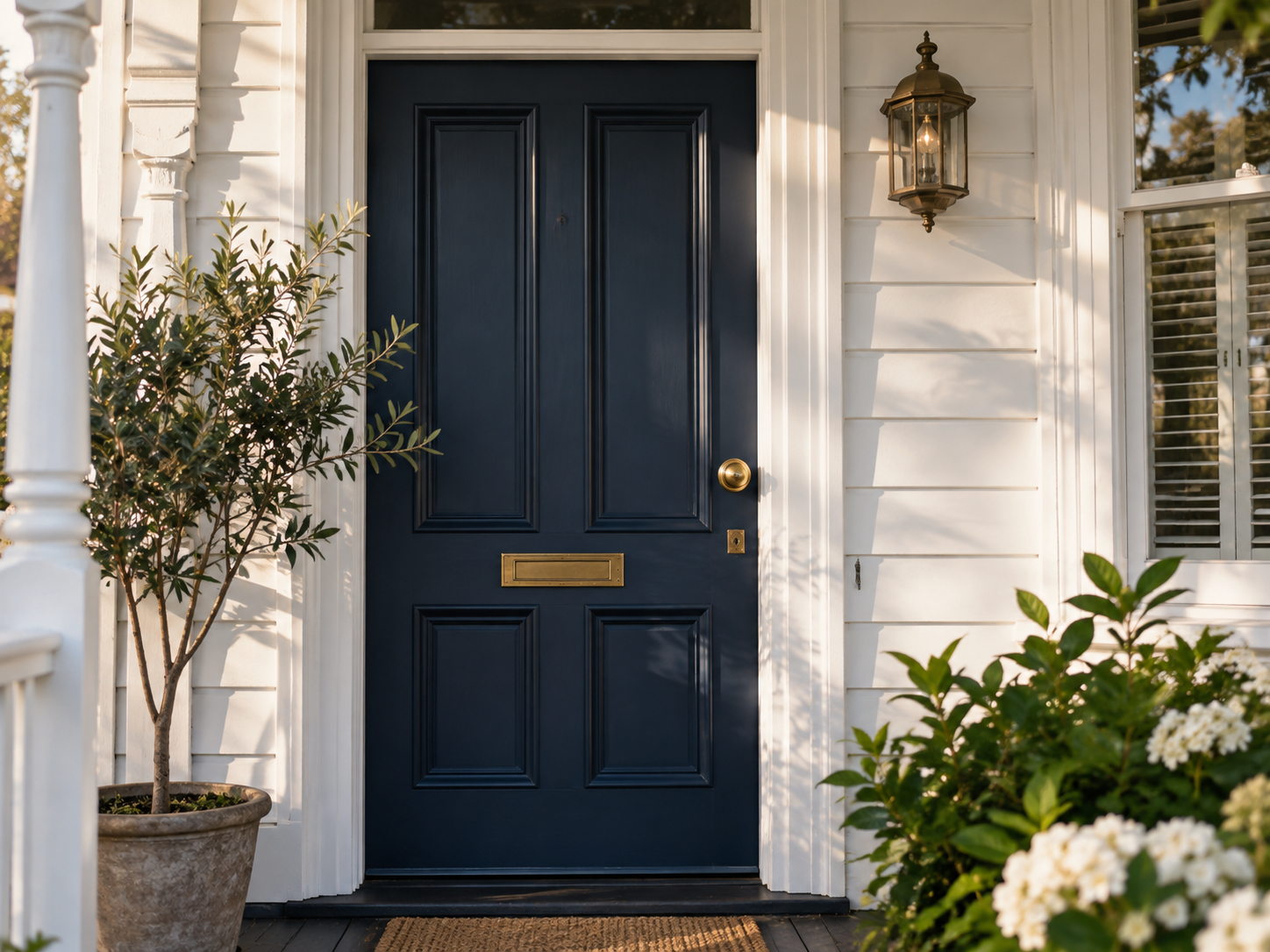
Navy is the safe-but-stylish pick that flatters almost every facade. It feels traditional on a weatherboard cottage, coastal on a Hamptons-style home, and smart on brick. For something with more energy, a richer blue-green such as Dulux Deep Aqua turns the door into a genuine feature without shouting. Blue front door colours work especially well against pale or white walls, where the contrast does all the heavy lifting. Keep the finish glossy so the colour reads deep and rich in daylight.
Green: The New Neutral
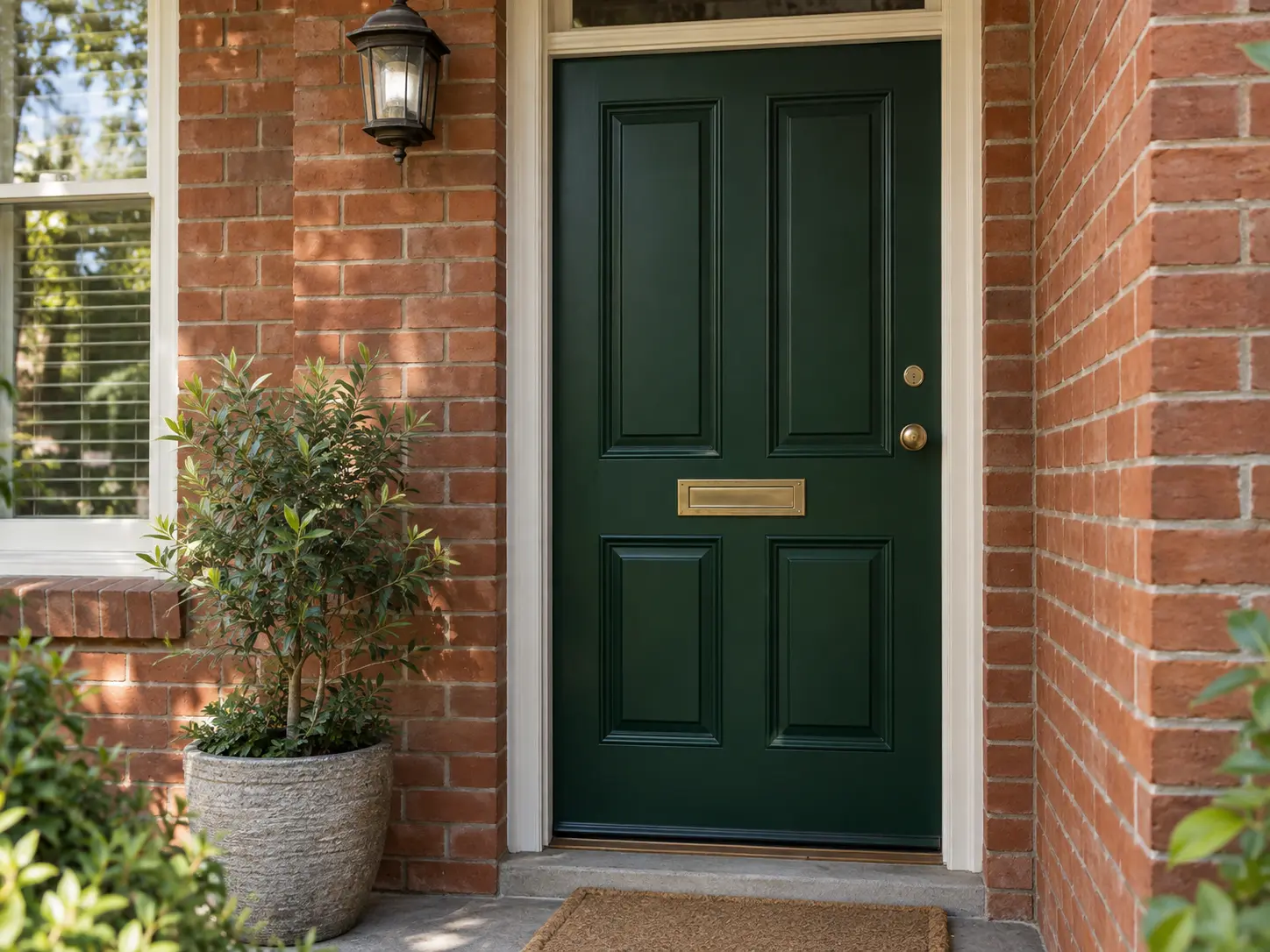
Green has quietly become one of the most-used exterior accents in Australia, and in 2026 the whole spectrum is in play — from soft sage to deep moss. Used in muted tones it behaves almost like a neutral, which is why designers now reach for it as a warmer alternative to grey. Dulux Deep Brunswick Green is a rich, classic option that suits both modern and traditional homes, while a botanical shade like Dulux Succulent feels fresh and grounded. Green front door colours look beautiful against red brick and natural stone, and tie a home into a leafy garden setting.
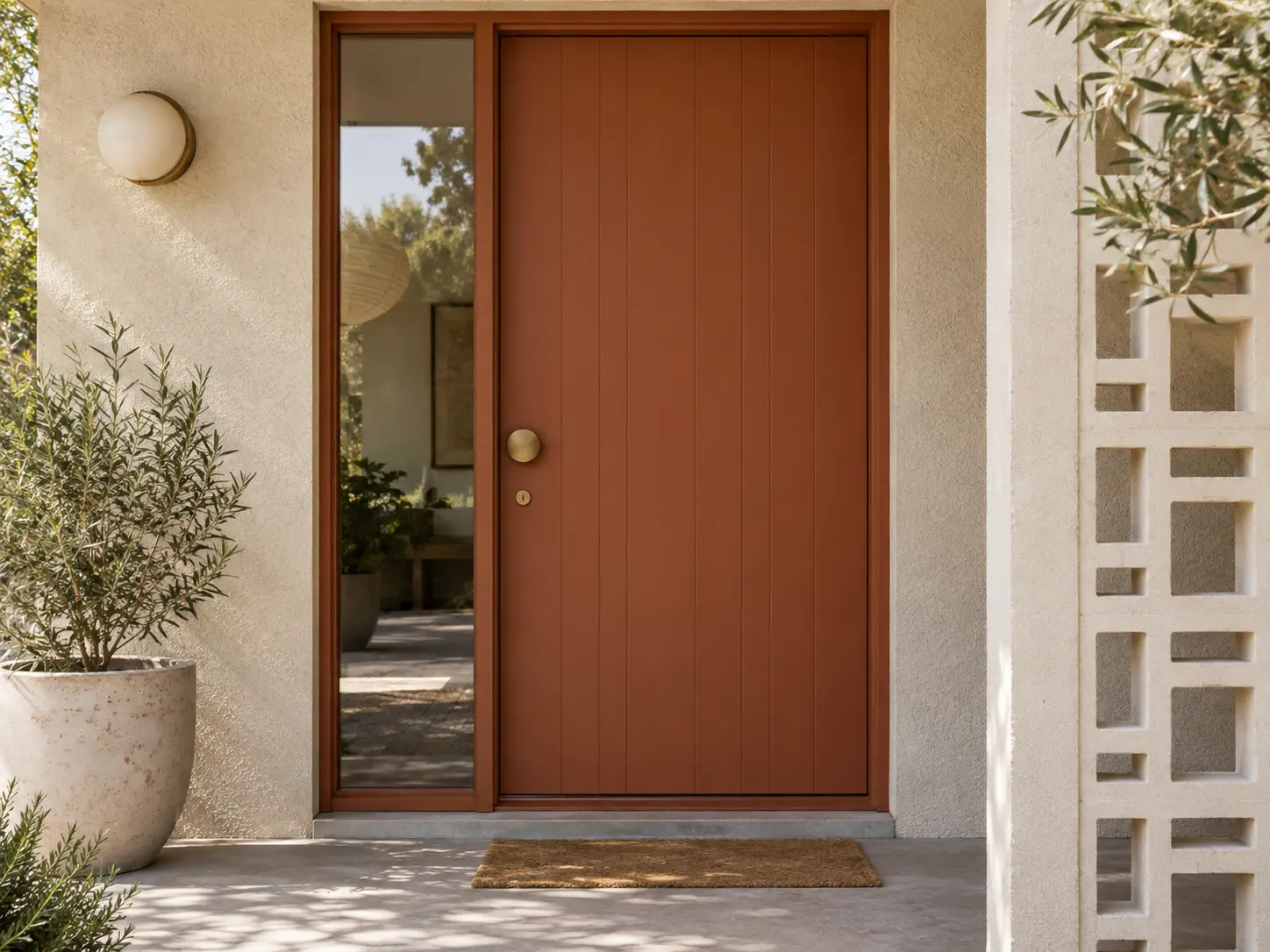
Earthy Terracotta and Clay: 2026’s Standout
Warm, earthy terracotta is the colour story of 2026, stepping in as one of the new neutrals replacing cool beige and grey. On a front door it feels grounding and sophisticated — impactful, but gentle rather than loud. These clay and rust tones flatter rendered facades, mid-century homes and anything with timber or stone nearby. If you want personality without a primary-colour commitment, an earthy terracotta is the easiest way in.
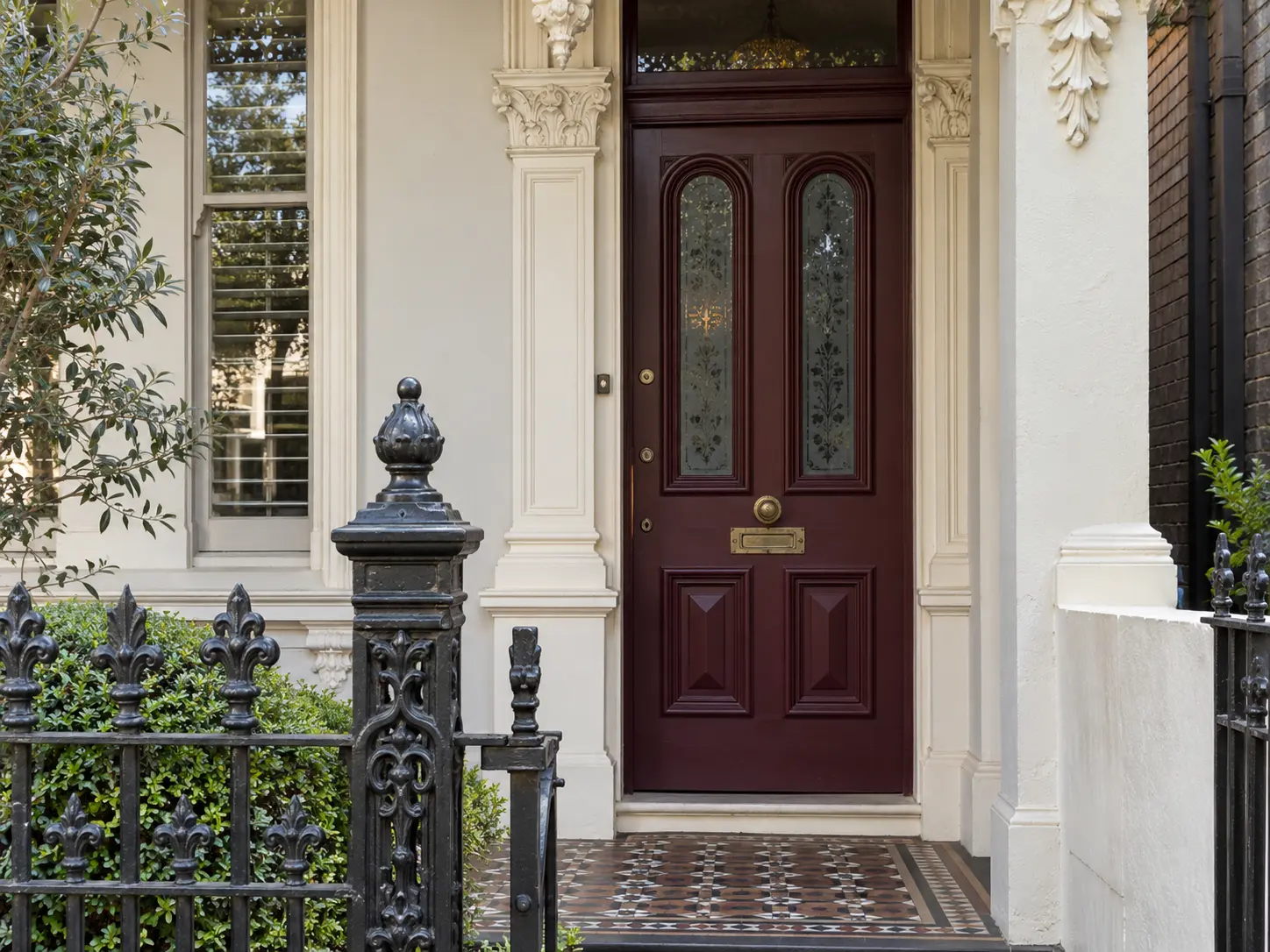
Burgundy and Deep Red: The Grown-Up Red
A red front door has always carried a welcoming, nostalgic charm, but the trend has shifted from bright primary reds towards deeper, more sophisticated burgundy and plum. These richer shades bring the same warmth with a more refined, contemporary feel, and they look superb on Victorian terraces and period homes around Melbourne’s inner suburbs. Burgundy pairs beautifully with cream or stone trims and darker roofs.
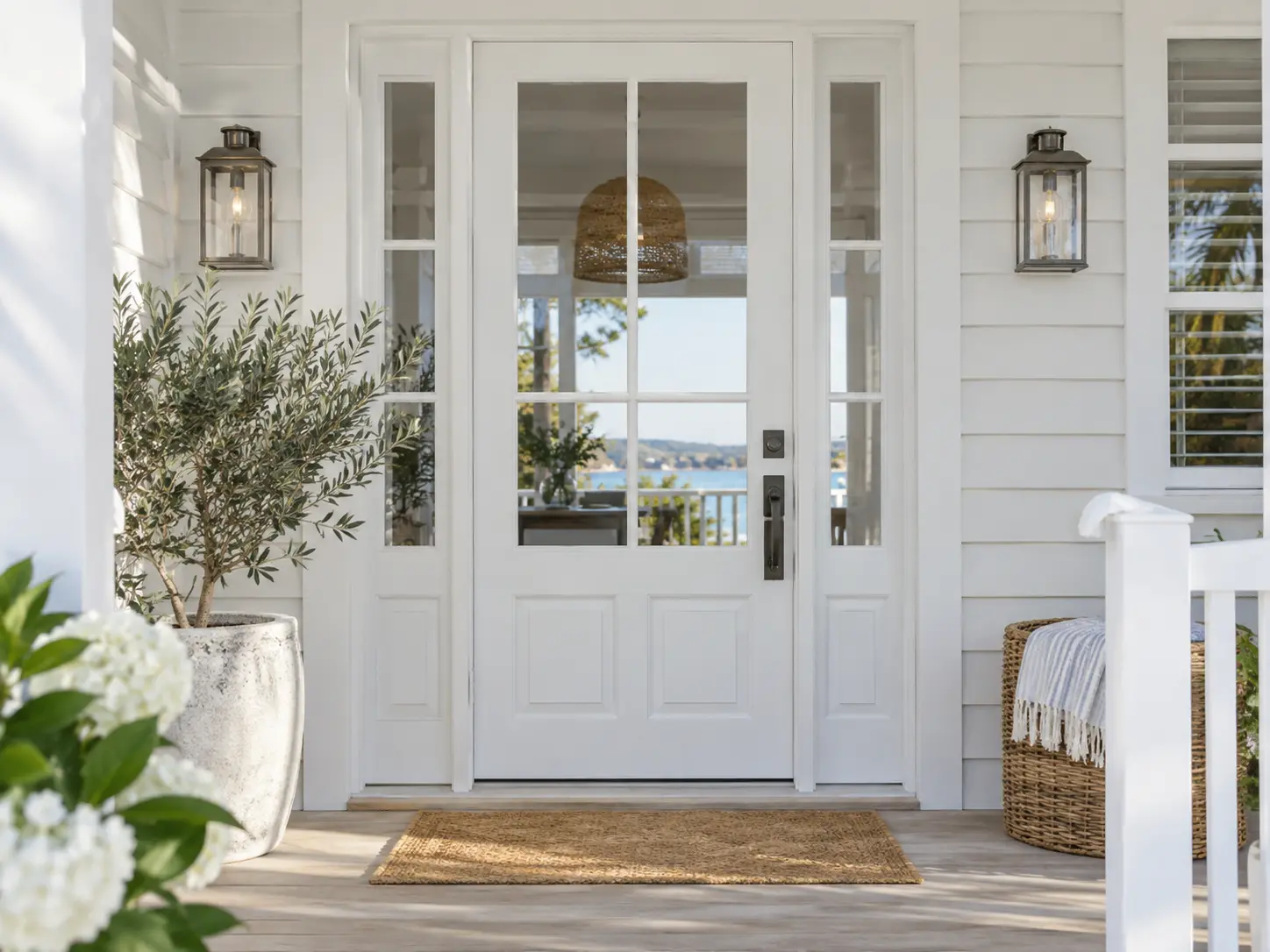
Crisp White and Soft Neutrals: Understated Elegance
Not every door needs to be a statement. A crisp white or warm off-white keeps things clean and classic, letting architectural detail and hardware do the talking — a natural fit for Hamptons, coastal and traditional homes. Dulux Natural White and Vivid White are dependable Australian choices. The trade-off is maintenance: pale doors show scuffs sooner, so a tough, washable exterior enamel earns its keep here.
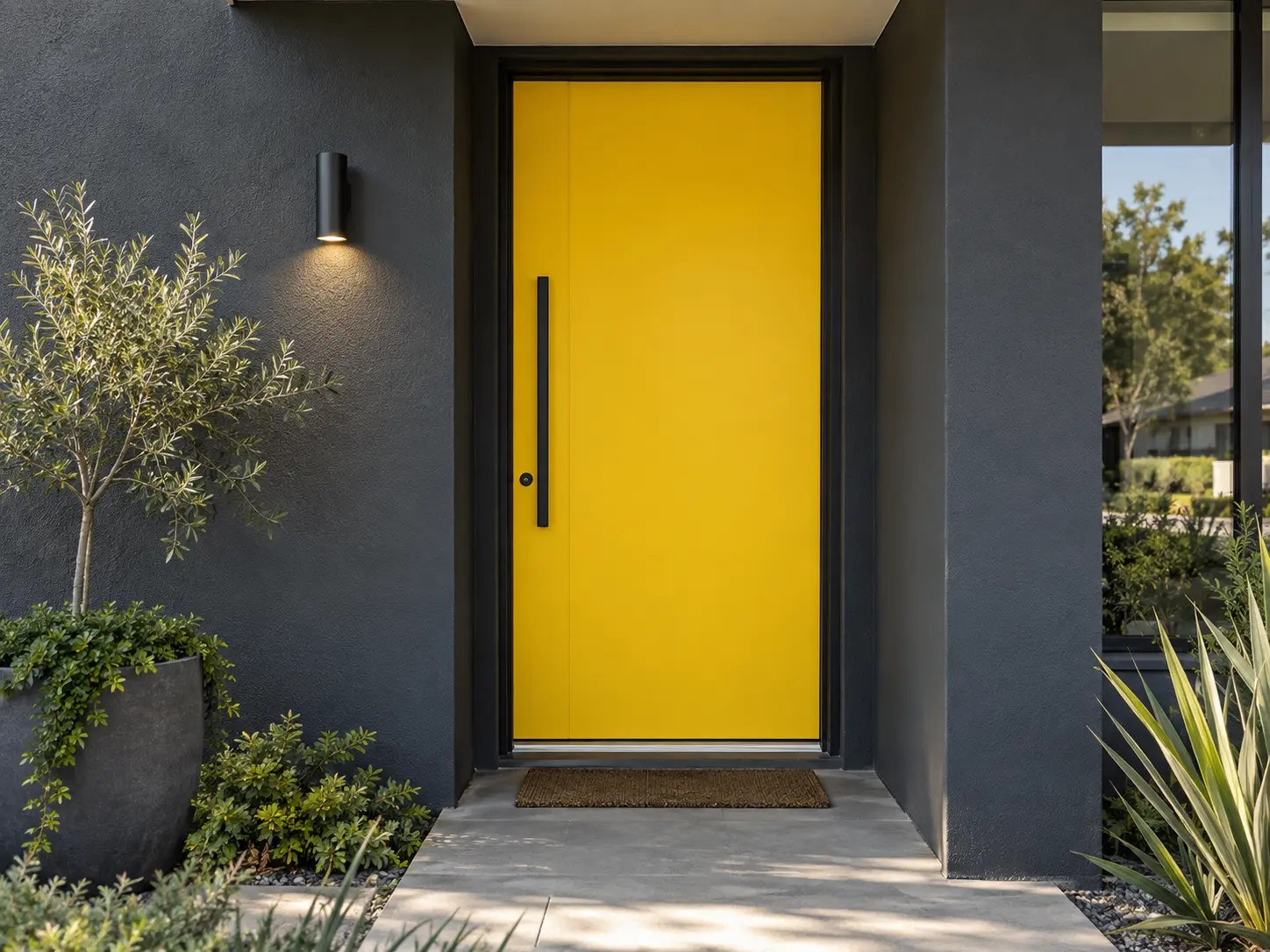
A Bold Pop: Yellow and Bright Accents
For the confident, a sunny yellow or other bright accent turns the entrance into pure personality. Yellow front door colours work best as a deliberate pop against a restrained facade — charcoal, white or stone walls — rather than competing with an already-busy colour scheme. Use it where you want the home to feel cheerful and unmistakably yours.
Choosing the Right Colour for Your Home
The best front door colour is the one that works with everything around it, so weigh up a few things before you commit:
- Your wall material — against red brick houses, navy, sage or olive green, charcoal and cream all sit well; avoid orange-leaning reds that fight the brick.
- Roof and trim colours — pick a door that complements, not clashes with, your roof, gutters and window frames.
- Light and aspect — Melbourne’s changeable light shifts a colour through the day, so always test before buying litres.
- Architecture — let the home’s era lead; period homes carry deep heritage tones, modern builds suit clean charcoals and greens.
Buy sample pots, paint a large swatch on the door or a board, and look at it in both morning and afternoon light before deciding.
Entrance and Exterior Door Colours: Same Door, Different Words
People search for the same decision in different ways — front door colours, entrance door colours, or the best exterior door colour. It is all the same choice: the shade for the main door facing the street, and everything above applies whichever term you use. The one extra thing to weigh for any exterior door colour is durability. A west- or north-facing entrance in Melbourne takes harsh afternoon sun, so lean towards UV-stable enamels, and remember that very dark colours — deep charcoal, black, burgundy — absorb more heat on a sun-blasted timber door. On a sheltered, south-facing entrance you have free rein.
What Colour Should the Door Frame Be?
The frame and architrave around the door quietly set off whatever shade you choose, and getting the door frame colour right is what makes an entrance look considered rather than rushed. Three approaches work reliably: paint the frame the same crisp white or off-white as your other trims so a bold door pops against it; carry the wall colour onto the frame so the door reads as one clean shape; or, for a high-end architectural look, match the frame to the door in the same deep tone. Whatever you pick, avoid leaving a weathered, mismatched frame around a freshly painted door — and use the same exterior enamel on the frame as the door so the sheen and wear stay consistent.
The Best Paint for a Front Door
The best front door paint is a premium exterior enamel. Water-based enamels such as Dulux Aquanamel — or a comparable exterior-grade product — give a hard, washable finish that stands up to sun, rain and daily handling far better than interior wall paint. Choose gloss or satin: both make the colour read richer and are easy to wipe clean. For the full brand comparison, see our guide to the best paint brand in Australia.
Painting Your Front Door the Right Way
A front door takes weather, hands and sun, so use a quality exterior enamel rather than leftover wall paint. Clean and lightly sand the surface, fill any dents, spot-prime bare timber, and apply two coats for depth and durability. A gloss or satin finish makes a colour look richer and is far easier to wipe clean. If you would rather a flawless, long-lasting result without the weekend effort, our team can handle it as part of a wider painting quote.
A Note for Melbourne Heritage Homes
Many of Melbourne’s period suburbs sit under heritage overlays, and in some cases external colour changes can require council approval. If you own a Victorian terrace in Fitzroy or Richmond, or a period home in Toorak, it is worth checking before you commit to a dramatic new facade colour. Done right, a deep heritage door colour can beautifully honour the home’s character.