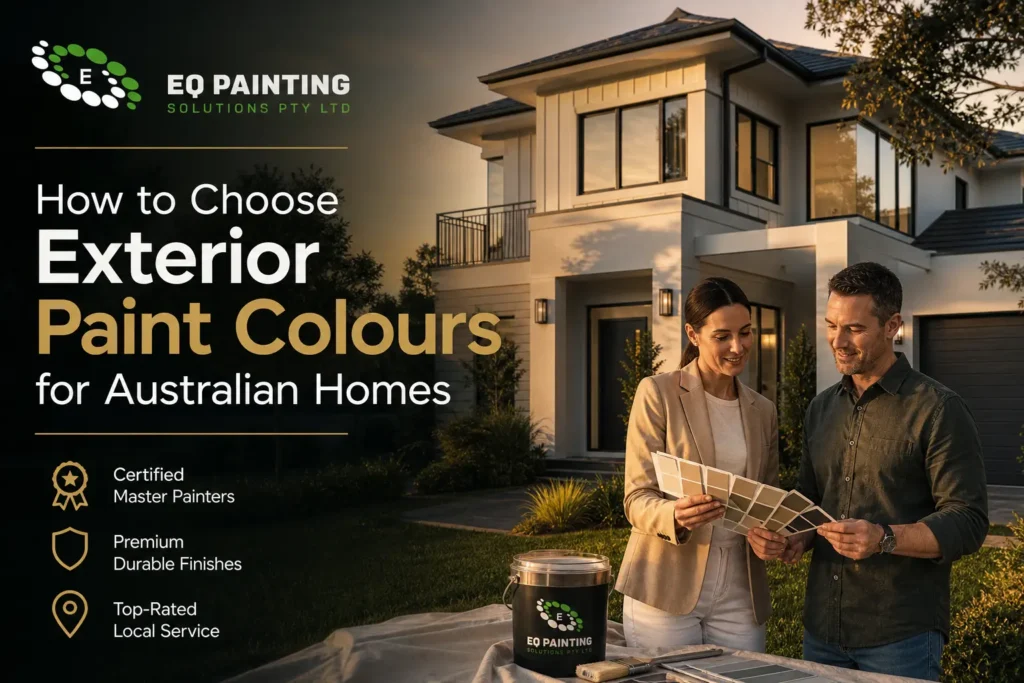
If you have been researching exterior paint colours Australia homeowners actually use, the hard part is not finding inspiration. The hard part is choosing a scheme that still looks right once it is spread across a full wall, sits beside your roofline, and catches the light at different times of day. We see this on site all the time across Melbourne, especially when a colour looked perfect on a tiny sample card but far too bright once it hit a west-facing wall.
After 15 years of painting homes, one pattern keeps showing up. People usually start with the colour they like, then try to make the house fit the colour. The better approach is the other way around. Start with the architecture, the fixed materials, the amount of sun the home gets, and the features you want to soften or highlight.
This guide will help you choose a colour scheme that suits the home, feels balanced from the street, and saves you from expensive second guesses. It pairs well with our wider guide on exterior home painting for better curb appeal, which covers the prep and finish side of the job. If your home is in Melbourne and you want a second opinion before the repaint starts, you can also speak with our team before you lock the colours in.
What actually affects exterior paint colours on Australian homes?
Exterior colour is never just about taste. The final result is shaped by the style of the house, the material you are painting, the orientation of the walls, the roof colour, and how much contrast already exists in the facade. A clean modern townhouse in South Melbourne needs a different palette from an older weatherboard home in Hawthorn or a coastal-style property in Brighton.
The safest way to choose exterior paint colours for an Australian home is to start with the fixed elements you cannot change, limit the palette to three colours, test large samples on different walls, and check them in full sun and shade before the full repaint begins.
- Architecture: Modern homes usually handle cleaner contrasts and simpler palettes better, while heritage and period homes often suit softer layering and more restrained trim choices.
- Fixed materials: Roof tiles, brickwork, stone, paving, window frames, gutters, and garage doors all influence what will work.
- Sunlight and aspect: North and west-facing walls can make colours feel lighter, warmer, and stronger than expected.
- Surface texture: Render, brick, timber, and weatherboards reflect light differently, even when the paint colour is the same.
- Street view: A scheme has to read well from the footpath, not just when you are standing half a metre from the wall.
- Maintenance reality: Very bright whites, harsh contrasts, and badly matched trims often show dirt and age faster.
One of the biggest mistakes we see is choosing the wall colour first and leaving the trims, fascias, gutters, and downpipes until the end. That usually creates a patchy result. A good exterior scheme is planned as one full system.
How to choose exterior paint colours Australia homeowners can live with for years
Step 1: Start with what is staying
Before looking at paint charts, walk outside and list every element that is not changing. That usually includes the roof, driveways, paths, brick sections, fences, stonework, and window frames. These fixed materials narrow the colour direction faster than any trend board will.
Step 2: Choose your main body colour
Your main wall colour covers the largest visual area, so it sets the tone for the whole home. Warm whites, soft greiges, muted greens, and earthy neutrals are often easier to balance outdoors than sharp whites or cold greys. If you want the home to feel larger and calmer, keep the body colour steady and let the details do the work.
Step 3: Add a trim colour that supports, not fights
Trim colour should clean up the shape of the home, not chop it into pieces. On many houses, a softer off-white or a slightly deeper shade from the same family looks more refined than a hard contrast. We commonly see eaves and trims painted too bright, which pulls attention to the wrong places and makes the body colour feel flatter.
Step 4: Use accent colour carefully
The front door, selected cladding sections, or small architectural details can carry the accent colour. Keep it controlled. A strong accent can add personality, but too many accents make the exterior feel busy from the street. The entry is the easiest place to start, and our guide to front door colour ideas for Australian homes walks through shades that lift a facade without overwhelming it.
If you are still comparing two or three directions, get advice before buying all the paint. It is much easier to book a free painting quote with EQ Painting Solutions than to repaint a full facade after the wrong colour call.
Step 5: Test sample pots on the house
Paint large sample patches on at least two different sides of the home. Look at them in morning light, afternoon light, shade, and from the street. Tiny swatches lie. Full-size samples tell the truth.
Step 6: Check the full palette together
Do not judge the wall colour in isolation. Stand back and look at the body colour, trim colour, roofline, gutters, and front door together. The scheme has to feel balanced as one picture.
What we commonly see on Melbourne homes before repainting
One common situation involves a homeowner choosing a fresh white for the walls because it looked clean online. Once it goes onto a large west-facing wall in Melbourne, the finish can feel too sharp by late afternoon and make the rest of the facade look tired. In suburbs like Richmond and Port Melbourne, where many homes already have strong street character, that contrast can feel even harsher.
Another pattern we see is trims being chosen too late in the process. The wall colour is locked in, then the gutters, fascias, and downpipes are rushed. What homeowners often assume is a small detail usually decides whether the whole exterior looks resolved or unfinished.
We also get called in after someone has tested colours on removable boards instead of the actual house. That sounds sensible, but it hides how the colour reacts against the roof, garden, neighbouring surfaces, and existing materials. After 15 years of exterior painting, the real lesson is simple: test where the colour will actually live.
Cheap paint and skipped prep create another problem. Even when the colour choice is good, poor surface preparation can leave patchy absorption, flashing, and uneven sheen. People often blame the colour, but the issue is sometimes the way the surface was prepared underneath.
Colour mistakes that can make a home look dated
- Using too many feature colours: More colour does not create more style. It usually creates visual noise.
- Choosing pure white for every trim: Outdoors, it can look too stark and show dirt quickly.
- Ignoring the roof colour: If the roof has a strong undertone, it will push against the whole palette.
- Highlighting downpipes: Downpipes usually look better when they blend in rather than stand out.
- Following trends without checking the house style: A colour trend can look great on one home and completely wrong on another.
- Testing only in shade: A colour that feels calm in the shade can look far brighter in direct sun.
Most dated exteriors are not ruined by one terrible colour. They are usually undone by poor balance. The body, trim, and detail colours are all competing instead of supporting each other.
Do you need a painter, a colour consultant, or just a touch-up?
Not every home needs a full repaint, and not every homeowner needs a formal colour consultation. Sometimes a small update is enough. Other times, the colour issue is really a prep, condition, or design problem that needs a professional eye.
Signs it is probably a smaller touch-up job
- The existing scheme still suits the home, and only a few sun-hit or weathered areas need refreshing.
- The trims are tired, but the main body colour still works with the roof and brickwork.
- You already know the paint colour and only need help restoring a clean, even finish.
Signs you should get a professional painter involved
- You are changing the whole palette, including walls, trims, fascias, and doors.
- The home has peeling paint, chalking, moisture marks, timber movement, or old patch repairs showing through.
- You are torn between multiple colour directions and do not want to guess wrong on a full exterior repaint.
- Access is difficult, the house is two storeys, or the prep work is bigger than it first appeared.
If you are in Melbourne and want practical advice rather than a generic colour chart, start with a site visit. Our team handles exterior house painting advice in Melbourne, and we can help you work through colours before the paint goes on.
What affects the final cost of an exterior repaint?
The only accurate way to know the cost is a free on-site quote, because every home is different. The final scope depends on the condition of the surface, the amount of prep required, access, the number of coats, and whether you are repainting walls only or the full exterior including trims, fascias, doors, gutters, and other details.
- Surface condition: Flaking paint, cracks, and weather damage increase prep time.
- Access: Two-storey work, slopes, and tight side access affect labour and setup.
- Materials: Timber, render, brick, cladding, and metal all need different prep methods.
- Coverage: Strong colour changes or patchy old paint can need extra coats.
- Detail level: Decorative trims and multiple colour changes take more time than a simple palette.
- Finish quality: Product choice and preparation standards affect the final scope.
Every job is different, so the only accurate way to know your cost is a free exterior painting quote. Final cost depends on surface condition, prep required, and the number of coats.
Related articles
If you are planning a broader repaint, these topics are worth reading next.
- Exterior Home Painting for Curb Appeal
- Front Door Colours: 2026 Ideas for Australian Homes
- How To Choose Best Interior House Painters
- House Painters Melbourne Guide
- Professional House Painters in South Yarra
Ready to narrow down your colours?
Choosing exterior paint colours is much easier when you look at the whole home rather than isolated swatches. If you want practical advice on colour direction, preparation, and repaint planning, contact EQ Painting Solutions for a free quote on 0498 200 654 or visit eqpaintingsolutions.com.au.
FAQ
The safest method is to start with the fixed elements, narrow the palette to three colours, test large samples on the actual house, and check them in different light. That process removes most of the guesswork and usually prevents the expensive mistake of choosing a colour that looked right only on a sample card.
Three colours is usually enough for a clean and balanced result. In most cases, that means one body colour, one trim colour, and one smaller accent colour for features like the front door or selected details.
Yes, they often do. Sunlight can make colours appear brighter, cleaner, and more intense than they looked indoors or on a small printed chip, which is why full-size testing matters.
No, not always. A softer off-white or a trim colour from the same family often looks more settled outdoors and can stop the facade from feeling too sharp or overly contrast-heavy.
Yes, but they need to suit the architecture, the size of the wall area, and the amount of sun exposure. Dark colours can look strong and grounded, but on large exposed areas they can also feel heavy if the rest of the palette is not balanced carefully.
If the surface is sound and the job is minor, a touch-up may be enough. If the exterior needs extensive prep, access equipment, multiple colours, or a full repaint, a professional painter usually saves time, reduces mistakes, and gives you a more even finish.
The timeframe depends on the size of the home, the condition of the surfaces, weather windows, and how much prep is needed before painting begins. A proper quote and site inspection is the best way to get a realistic timeline for your property.
EQ Painting Solutions works across Melbourne and surrounding suburbs, including areas such as St Kilda, South Yarra, Prahran, Malvern, and nearby locations. If your suburb is not listed, it is still worth getting in touch because service coverage can vary by project size and schedule.
Take a few photos, note the surfaces that are being painted, and make a short list of any colours you are considering. That makes the first conversation faster and helps the quote focus on the real scope of work, not just the colour idea.
Pull the palette from what's already growing outside — muted eucalyptus greens, warm ochres, terracotta and stone-grey tones sit naturally against native gardens because they echo the same colours already in the bushland, ironstone and greenery rather than competing with them. Test the shortlisted colours next to the actual planting at midday and late afternoon, since Melbourne's native greens can shift a warm exterior tone more than a manicured lawn would.
The most useful free exterior colour visualisers in Australia are the Dulux Colour Visualiser and the Haymes Colour Visualiser, which let you upload a photo of your house and preview body, trim and accent colours before you buy. They're a great shortlisting tool, but a screen never matches a wall exactly — always confirm your top two or three with large sample pots painted onto the actual house and checked in both morning and afternoon light. If you'd rather skip the guesswork, we can bring physical samples and colour-match on site.
There's no single best colour for every home exterior — the right pick depends on your home's era, wall material and roofline. As a safe, widely-loved starting point across Melbourne: soft off-whites and warm greys suit most brick and render homes, charcoal and deep green work well on weatherboard and period homes, and classic Colorbond neutrals like Surfmist or Monument pair reliably with most roof colours. Whichever direction you lean, test a large sample patch on your own walls in morning and afternoon light before committing — the "best" colour is always the one that actually suits your specific house, not a generic trend.
Pingback: How to Choose Colours for Melbourne Period Homes
Pingback: Why Does Exterior Paint Fade? Causes & Fixes (Melbourne)