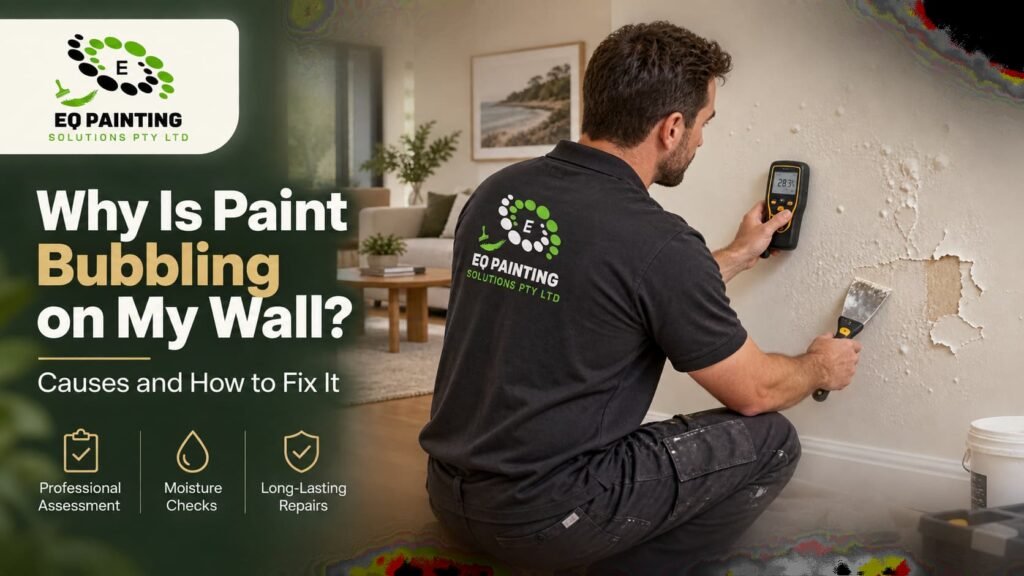
You walk past a wall you painted a few weeks ago and there it is: a cluster of little blisters lifting off the surface, like the paint is trying to peel itself away. It’s one of the most common calls we get, and the frustrating part for most homeowners is that the wall looked perfect when the roller came off it. Wall paint bubbling almost always comes down to one thing — the paint stopped gripping the surface underneath it, and something got in between. Usually that something is moisture, dust, or heat.
The good news is that most bubbling is fixable, and a fair bit of it is preventable once you know what actually caused it. The trap is treating the symptom instead of the cause: scrape and repaint a blistered patch without fixing why it bubbled, and you’ll be looking at the same spot again within a year. This guide walks through why paint bubbles on Melbourne walls, how to fix it properly, and when a bubble is telling you about a bigger moisture problem behind the wall. If you’d rather have someone assess it in person, our interior house painters in Melbourne deal with this regularly across the inner suburbs.
What Causes Paint to Bubble on a Wall?
Paint bubbles when the film lifts away from the surface it’s supposed to be stuck to. Air or moisture gets trapped in the gap, pushes the paint up, and you get a blister. Every cause below is really just a different reason the bond failed — either it never formed properly, or it broke down later.
- Moisture behind the paint. The most common cause in Melbourne homes. A leaking pipe, a roof or gutter problem, rising damp, or simply condensation in a poorly ventilated bathroom pushes moisture through the wall, and the paint lifts as it tries to escape.
- Poor surface prep. Painting over a dusty, greasy, or chalky wall gives the paint nothing solid to grip. Kitchen and hallway walls collect a surprising amount of grime, and fresh paint lifts off it as it dries.
- Painting in heat or high humidity. Melbourne summers can dry the surface of the paint before the layer underneath has cured, trapping solvent or moisture. The same happens on a north-facing exterior wall in direct afternoon sun.
- Painting over bare or new plaster without sealing. Fresh plaster and patched areas are porous and pull moisture out of the paint too fast. Without a suitable plaster sealer or primer, the topcoat lifts instead of bonding.
- Old, unstable paint layers. On older walls with many coats built up over the years, a new coat can pull the tired layers beneath it loose, and the whole lot bubbles together.
- Overworking the paint during application. Rolling too quickly, repeatedly passing back over paint as it starts to dry, or laying on an excessively thick coat can all introduce air into the film, which shows up as small bubbles once it dries.
Working out which of these you’re dealing with is the whole game, because the fix for a dirty wall is completely different from the fix for a leaking one.
Is the Bubbling in the Topcoat, or All the Way Down?
Before you touch it, it’s worth knowing how deep the problem goes, because that decides whether you’re doing a quick patch or a proper repair. Press gently on a dry bubble and, if you’re willing to sacrifice it, break one open with a scraper.
If the bubble only involves the top layer of paint and the surface underneath is sound and dry, you’ve got a cosmetic problem — usually poor prep or application. That’s a scrape-and-patch job. But if the paint has lifted right down to the bare wall, or the back of the blister feels damp, you’re not looking at a paint problem at all. You’re looking at a moisture problem that happens to show up as bubbling. Repainting that without fixing the water source is money down the drain.
How to Fix Bubbling Paint on a Wall
Once the paint is completely dry and you’ve worked out the cause, the repair itself is straightforward. The order matters more than the tools.
- Find and fix the cause first. If there’s moisture behind the blister, trace it — a leaking pipe, failed grout, a roof or gutter issue, or a bathroom with no working exhaust fan. Fix that before anything else, or the repair won’t hold.
- Scrape back the loose paint. Use a putty knife or scraper to remove every bubbled and lifting section back to a firm, well-stuck edge. Don’t leave loose edges — they’ll keep peeling.
- Sand the edges smooth. Feather the sanded edges of the sound paint into the bare patch so the repair won’t show as a ridge under the new coat. Safety note: if the home was built before 1970, don’t sand or scrape old coatings until they’ve been checked for lead. Disturbing lead-based paint can release hazardous dust — our guide on painting problems in older homes covers safe handling in more detail.
- Clean the surface. Wash away dust and grease with sugar soap, then let it dry completely. This is the step most people skip, and it’s a leading cause of the repair bubbling again.
- Prime the bare area. Seal bare plaster or filler with a suitable primer. If moisture caused staining, a stain-blocking primer can be used once the leak or damp source has been repaired and the wall has dried out completely — primer can block a stain, but it can’t stop active moisture. Priming controls how fast the surface pulls at the paint, which is exactly what stops repeat bubbling once the cause is actually fixed.
- Repaint in thin, even coats. Two thinner coats beat one heavy one every time. Paint in reasonable conditions — not in the hottest part of a summer afternoon, and with the room ventilated.
Why Melbourne Walls Bubble More Than You’d Expect
A lot of the advice online is written for other climates, and Melbourne throws its own conditions at a paint job. Our winters are cool and damp, which slows drying right down — paint that would cure overnight in summer can stay soft for days, and a second coat rushed on too soon traps moisture underneath. Older bathrooms, laundries and south-facing rooms in homes around Richmond, Fitzroy and Brunswick often lack modern moisture barriers, so condensation sits in the wall and keeps lifting the paint no matter how many times it’s redone.
Then there’s the flip side in summer: harsh UV on a north or west-facing exterior wall can skin over fresh paint in minutes, trapping what’s underneath. The result is the same bubble, from the opposite cause. If your bubbling is in a wet area, our guide on mould-resistant paint for Melbourne homes covers the coatings that actually hold up in bathrooms and laundries.
When Bubbling Means a Bigger Moisture Problem
Some bubbling is a warning sign, not a cosmetic flaw. If blisters keep coming back in the same spot, appear low on a wall (a classic sign of rising damp), feel damp behind them, or spread after rain, the wall is telling you water is getting in somewhere. Painting over it repeatedly just hides the evidence while the real problem — a leak, failed waterproofing, or a damp issue — keeps working away behind the surface.
An experienced painter can assess the damaged coating and point out the common warning signs. But an active plumbing leak, rising damp or failed waterproofing usually needs to be investigated by the appropriate licensed trade before repainting goes ahead — fixing the coating without fixing the source just buys you a few more months. For a sense of what a proper repaint involves once the cause is sorted, our house painting cost guide for Melbourne breaks down what moves the price.
How to Stop Paint Bubbling Before It Starts
Prevention is almost entirely about prep and conditions. Clean the wall properly before you paint. Seal any bare plaster, filler or patched areas with the right primer. Make sure the surface is dry — not just dry to the touch, but genuinely dry, which in a Melbourne winter can take longer than you’d think. Apply paint in thin coats and give each one enough time to cure before the next. Avoid painting in the hottest, most humid part of the day. And in wet areas, use a paint built for the moisture it’ll face rather than a standard interior wall paint.
Get those right and bubbling largely takes care of itself. Skip them to save an afternoon and you’ll usually pay for it within the year.
Related Articles
If you’re sorting out a paint problem, these guides go deeper on the decisions involved:
Frequently Asked Questions
In many cases, a bubbling wall isn’t really about the paint at all — the underlying issue is usually poor surface preparation, trapped moisture, or an unstable existing coating. Sort the cause, prep the surface properly, and paint in sensible conditions, and the repair will hold for years rather than months.
Not sure whether your bubbling is a quick patch or a sign of something behind the wall? Get in touch with EQ Painting Solutions for an honest assessment and a free quote — call 0498 200 654 or request a quote online.