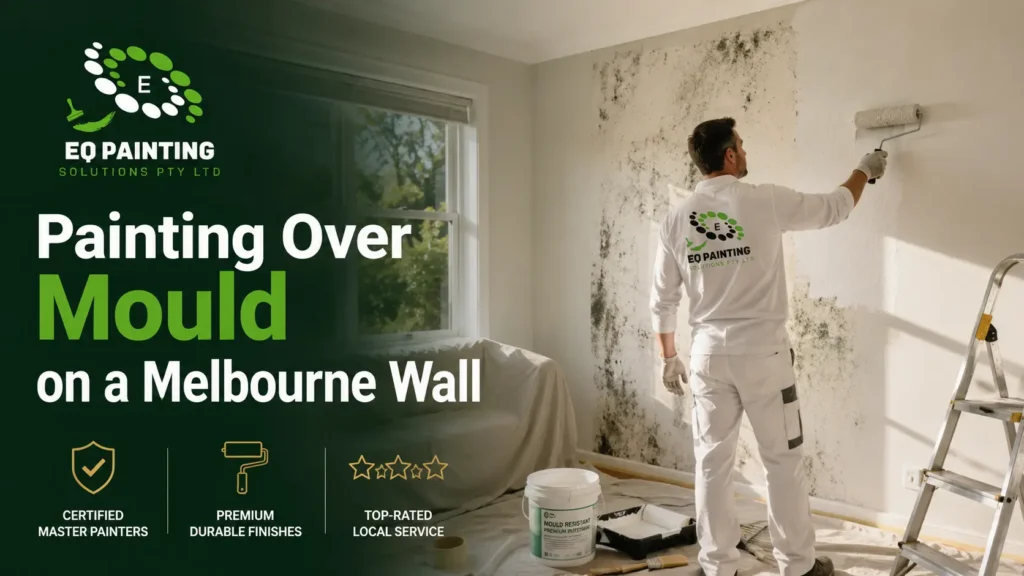
Short answer: you shouldn’t. Painting straight over mould doesn’t kill it — the spores keep living under the new coat, and within a few months you get bubbling, staining and that same dark patch bleeding back through. We get called out to Melbourne homes for exactly this every winter, usually a bathroom ceiling or a cold south-facing bedroom wall someone rolled over in a hurry. So while the honest answer to can you paint over mould is “yes, physically you can,” the answer that actually saves you money is “not until it’s treated and the wall is bone dry.” This guide walks you through why it fails, how to prep a mouldy wall properly, what primer and paint actually hold up in our climate, and when it’s worth calling a painter instead of fighting it yourself. If you want the product side in depth, our guide to mould-resistant paint in Melbourne covers what works and what’s marketing.
Why Painting Over Mould Almost Always Comes Back
Mould is a living organism, not a stain. It feeds on moisture and the tiny bit of organic matter in dust, plaster and paint film. Cover it with a fresh coat and you’ve done nothing to the colony underneath — you’ve just given it a dark, damp roof to keep growing under.
Standard paint contains water, so you’re often feeding it as you go. Within a season the mould pushes back through, the fresh paint lifts at the edges, and the stain reappears darker than before. We’ve scraped back “freshly painted” walls in Brunswick and Coburg that were done less than six months earlier — the new paint peeled off in sheets because it never bonded to a clean, dry surface.
There’s a Melbourne-specific reason this keeps happening. Our winters are cold and damp, a lot of older homes have poor wall insulation, and warm indoor air hits cold external walls and condenses. That condensation is the fuel. Paint over it without fixing the moisture and you’re painting over the symptom, not the cause.
Find the Moisture First — It’s Never Just the Wall
Before any prep, work out where the water is coming from. Mould is a messenger. Common culprits we find on site:
- Poor ventilation — bathrooms with no exhaust fan, or one that vents into the roof cavity instead of outside.
- Condensation — cold, uninsulated external walls and single-glazed windows, very common in Melbourne’s older weatherboard and brick homes around Fitzroy, Richmond and Coburg.
- Leaks — a slow roof, gutter or plumbing leak that keeps the plaster damp from behind.
- Rising damp — tide marks and powdery residue low on the wall, usually needing a specialist, not a paintbrush.
If you skip this step, everything after it is wasted effort. Fix the source, improve airflow, and only then move on to cleaning the wall.
How to Prep a Mouldy Wall Before Painting
Once the moisture source is sorted, the actual prep is straightforward but non-negotiable. Here’s the order we use on the tools:
- Protect yourself. Wear a P2 mask, gloves and eye protection. Disturbing mould releases spores, and you don’t want to breathe them.
- Kill the mould. For light growth, a diluted solution works — roughly one part white vinegar to one part water, left on for 10–15 minutes. For anything heavier, a product like Selleys Rapid Mould Killer does the job faster.
- Scrub and rinse. Work it in, then wipe the surface clean. Don’t just paint over a dead stain — get the residue off.
- Let it dry completely. This is the step everyone rushes. The wall needs to be fully dry before primer, which in a cold Melbourne room can mean a couple of days with the heater and a fan running, not a couple of hours.
Rushing the drying stage is the single most common reason a mould repaint fails. If the surface still feels cool or damp to the back of your hand, it isn’t ready.
Primer and Paint That Actually Hold Up Here
Once the wall is clean and dry, a stain-blocking primer does two jobs: it seals any remaining discolouration so it can’t bleed through, and it gives the topcoat something solid to grip. A shellac-based stain blocker like Zinsser B-I-N is a reliable choice for stubborn mould and water stains.
For the topcoat, use a paint designed for moisture-prone rooms. Anti-mould paints such as Dulux Wash&Wear with anti-bacterial properties won’t kill existing mould — nothing in a tin will — but on a clean, dry, primed surface they slow future growth. In wet rooms, a low-sheen or semi-gloss finish resists moisture and wipes down far better than a flat finish. If you’re deciding on sheen, our take on matte or satin for humid Australian homes breaks it down room by room.
Thinking about handling the whole job yourself? If it’s a small patch you’ve properly dried out, DIY is realistic. If the mould keeps coming back or covers a large area, that’s usually a sign the underlying moisture problem needs a professional eye — our honest breakdown of DIY versus hiring a professional painter can help you decide before you commit a weekend to it.
When to Stop and Call a Painter
A good rule of thumb: small spots under about one square metre, on a wall you’ve clearly dried out, are fine to tackle yourself. Beyond that — or if the mould has come back after you’ve already treated it once — get someone in. Recurring mould almost always means the moisture source hasn’t been solved, and no amount of paint fixes a plumbing leak or a ventilation problem.
At EQ Painting Solutions we’ve spent 15 years prepping and repainting mould-affected walls across Melbourne, from bayside bathrooms in St Kilda and Port Melbourne to heritage homes in the inner north. We treat the surface properly, seal it, and use the right system for the room — so it stays clean instead of coming back next winter. If you’re not sure whether it’s a repaint job or a damp problem, a quick look is often all it takes to tell.
Related Articles
More reading from our Melbourne painting team:
Frequently Asked Questions
No — not safely, and not until the mould is treated. Painting over live mould traps it under the film, where it keeps growing and eventually bleeds back through. Kill the mould, let the wall dry completely, then prime and paint. Only then is it safe and lasting.
The mould keeps growing under the new coat. Within a few months you'll usually see the paint bubble, peel at the edges, and the dark stain reappear. You've hidden the problem for a season, not solved it — and created more prep work for next time.
Yes. Once the wall is clean and fully dry, use a stain-blocking primer such as a shellac-based Zinsser B-I-N. It seals any leftover discolouration so it can't bleed through and gives your topcoat a solid, sealed surface to bond to.
Wait until the surface is completely dry — not just touch-dry. In a cold, damp Melbourne room that can mean a day or two with a heater and fan running, not a couple of hours. If the wall still feels cool or damp, it isn't ready for primer.
It can. Painting doesn't remove mould spores, so an active colony keeps releasing them into the air, which can affect breathing and indoor air quality. Wear a P2 mask while treating it, and remove the mould properly rather than sealing a live problem behind paint.
On a clean, dry, primed surface, yes — anti-mould and anti-bacterial paints like Dulux Wash&Wear are designed to slow future growth. But they won't kill mould that's already there. They're a preventative finish, not a treatment, so the wall has to be mould-free first.
Always. Removing the mould and fixing the moisture source is the only way to stop it returning. Painting over it — even with anti-mould paint — just hides a living problem that resurfaces. Clean it, dry it, seal it, then paint for a finish that lasts.
No reputable painter will. A professional treats the mould, addresses the moisture cause, dries and seals the surface, then repaints with the right system. If someone offers to just paint over it, that finish will fail — you're paying twice for the same wall.
A mould killer (vinegar solution or Selleys Rapid Mould Killer), a shellac stain-blocking primer like Zinsser B-I-N, and a moisture-resistant topcoat such as Dulux Wash&Wear in low-sheen or semi-gloss. Our mould-resistant paint guide covers the topcoat options in more detail.
Painting over mould is one of those jobs that looks finished and then unravels a few months later. The wall you painted in a rush is the wall you’ll be scraping back next winter. Do it once, properly: find the moisture, kill the mould, let the surface dry right through, seal it with a stain-blocking primer, and finish with a paint built for damp rooms. That’s the difference between a patch that keeps reappearing and a wall that stays clean.
If the mould keeps coming back, or you’d rather have it treated and repainted properly the first time, we’re happy to take a look. Get in touch for a free quote — free quotes across Melbourne, and a straight answer on whether it’s a paint job or a damp problem. Call us on 0498 200 654.
Pingback: How Long Does It Take to Paint a House? (Melbourne 2026)
Pingback: Why Is Paint Peeling Off the Wall? 8 Causes & Fixes