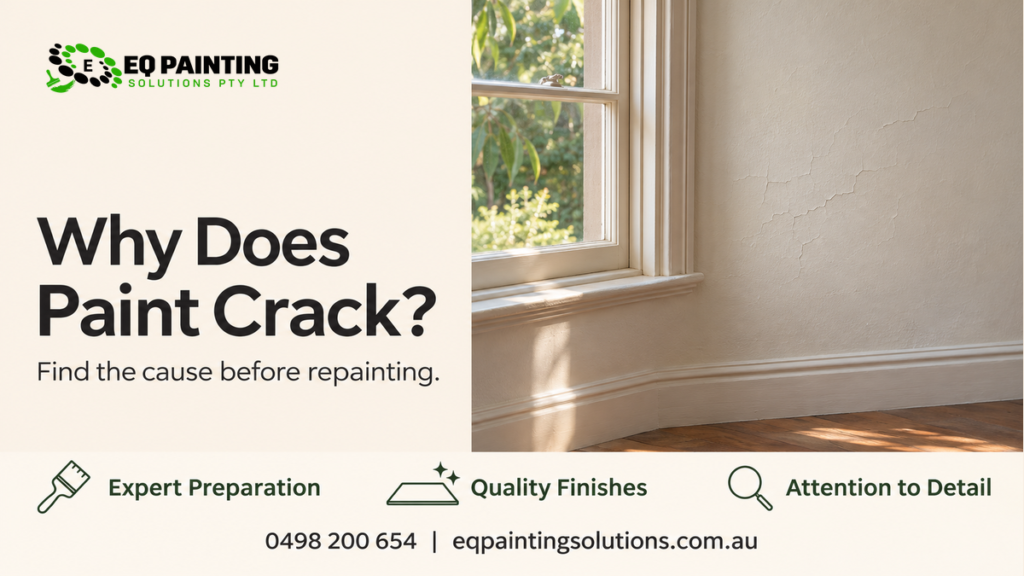
Why does paint crack? Paint can split because the coating has become brittle, was applied incorrectly or cannot cope with movement beneath it. Fresh, thick coats can develop mud cracking, while old coatings may form an alligator-like pattern. A crack through plaster, timber or a joint needs a different assessment from damage confined to the paint.
Before reaching for filler, note where the lines appear and when they started. A newly painted corner, an old window frame and a recurring wall crack can look similar from across the room, yet call for different work.
For a repaint, our interior house painting service in Melbourne can help you discuss the coating condition and agreed preparation. The first decision is whether the surface is ready for painting or needs another problem investigated first.
Is the paint cracking, or is the wall underneath cracked?
Paint-film cracking is a split within one or more coating layers. A wall or joint crack extends into the material or connection beneath them. Looking at the pattern can help you describe the problem, but a photograph or a fine line alone cannot establish that a building is structurally sound.
Start with observations that do not disturb the surface:
- Record the timing. Did the lines appear as a new coat dried, after a repair, or gradually over several years?
- Look at the route. Is there a network across the painted area, or a line following a corner, joint or window opening?
- Check the history. Has the same line returned after filling? Keep earlier photographs and details of previous work.
- Note accompanying changes. Tell the assessor about water staining, distorted openings or changes elsewhere in the room.
Take an overview photograph and a closer image from the same position when recording changes. Keep the date and location with each image. This gives the person assessing the surface useful context without requiring you to scrape open a crack.
Why does fresh paint crack as it dries?
A coat applied too heavily can develop deep, irregular splits known as mud cracking. Paint build-up in corners and contamination left on the surface are recognised possible causes. The pattern resembles dried mud, but it does not identify every cause of a failed new coating.
Check the product used, its spreading rate and the application method. Loading a corner with extra paint to cover it in one pass can create a different film thickness from the middle of the wall. Follow the manufacturer’s specified coverage and film build rather than choosing an arbitrary number of thin coats.
If the failure is recent, retain the paint label, batch information and photographs before attempting a repair. Ask the painter or manufacturer to assess it. Repeating the same application over a cracked coat can leave the original failure underneath.
What causes alligatoring in old paint?
Alligatoring describes a network of cracks that resembles reptile scales. An ageing oil-based coating can become less flexible as it repeatedly expands and contracts. A hard coating over a softer layer, or a topcoat applied before its base is ready, can also produce this type of failure.
Age is therefore one possibility, not a complete diagnosis. Ask what layers are present and whether they remain sound. A new topcoat cannot make a brittle or incompatible underlying coating dependable.
The preparation plan may involve removing failed layers and selecting compatible preparation and finishing products. Establish the safe removal method before starting, especially on older painted surfaces. An alligator-like appearance does not prove whether lead is present.
Why do cracks appear at corners, windows and caulked joints?
A line at a material junction deserves its own inspection. Check whether the paint has split over a sealed gap, whether the sealant has pulled away, or whether the adjacent wall material is cracked. These observations help define the question; they do not replace assessment.
Paint over caulk can crack when the sealant and coating are not ready or compatible, or when the paint film is too heavy. Paint-over requirements can differ with the sealant, bead size, temperature and paint finish. Follow the matching instructions for both products instead of assuming that a skinned surface is ready.
For example, the Selleys No More Gaps Interior Fast Dry technical sheet gives different paint-over guidance for different finishes. This illustrates why one waiting time cannot apply to every caulked joint.
For new plaster or repairs, also establish that the material is sound, sufficiently dry and prepared for the chosen system. Our guide to painting new plaster covers those preparation decisions in more detail.
When should you investigate before repainting?
Arrange a building assessment when cracking is accompanied by bulging walls or doors and windows that stick or distort. Foundation movement can affect walls, and the cause of excessive movement needs investigation by an appropriately qualified civil or structural engineer.
A crack that keeps returning, visibly changes or continues through the underlying material is also a reason to seek advice before concealing it. Explain the history and any changes elsewhere. Avoid treating a single crack-width measurement as permission to paint.
Water staining or persistent dampness needs its source investigated and corrected before decorating. A painter’s coating assessment and a building or plumbing investigation answer different questions. Painting over the mark will not establish that the moisture source has been resolved.
How do you prepare cracked paint safely?
Check for hazardous old coatings before sanding, scraping or stripping. WorkSafe Victoria advises testing where a building predates 1970 or there is concern that lead-based paint is present. Newer paint can conceal older layers, and disturbing lead paint can release hazardous dust.
Tell the contractor about known lead paint and previous test results. If the history is uncertain, arrange suitable testing and a safe work plan before disturbing the coating. Keep occupants away from preparation dust; follow the selected products’ safety data sheets, including ventilation and protective-equipment requirements for dust or fumes.
Once hazards and underlying causes have been addressed, the preparation sequence should suit the actual failure:
- Establish the sound surface. Assess the failed coating and surrounding adhesion so the repair has a stable boundary.
- Prepare and repair within scope. Remove unsound material by the agreed safe method, then address suitable surface defects. A moving joint or structural fault requires its own solution.
- Match the coating system. Choose compatible preparation products for the exposed material and existing finish. Bare timber and plaster need appropriate preparation before repainting.
- Apply within the instructions. Follow specified spreading, thinning, drying and recoating requirements in the actual conditions.
A repair that reveals further loose layers may need a wider preparation area than first expected. Ask how that possibility will be handled before work begins.
When should you call a painter?
Call a painter when the coating is failing, the preparation area is uncertain or you need a repaint plan after an underlying problem has been resolved. Bring photographs, the paint details if available and a record of previous repairs.
EQ Painting Solutions addresses surface problems and agreed repairs as preparation before painting. The scope depends on the surface and assessment; structural repairs and specialist damp remediation require the appropriate specialist. You can discuss the repaint and request a free quote before deciding how to proceed.
Related Articles
Use these guides for the next stage once the cause of cracking is understood:
- Why paint peels off walls and how the causes differ
- Wall preparation before painting
- Painting problems in older Melbourne homes
Serving Melbourne suburbs
EQ provides painting across Melbourne and surrounding suburbs, including Fitzroy, Brunswick, Hawthorn and Middle Park. For an older-home repaint, discuss the coating history and retained surfaces. The condition of the individual property determines the preparation needed.
Frequently Asked Questions
A heavy coat, particularly where paint collects in corners, can develop mud cracking. Keep the product and application details so the cause can be assessed before another coat is applied.
The coating may be failing, or a crack may extend into the wall beneath it. Note the pattern, timing and repair history; the appearance alone cannot confirm the depth or cause.
Some older coatings become brittle and lose flexibility. Check the condition of the underlying layers before repainting, because a fresh finish still depends on the surface beneath it.
The paint and sealant may have different drying or movement characteristics. Check compatibility, paint-over instructions and film thickness for the exact products; adding more paint does not resolve a failing joint.
Corners can collect excess paint during application, while some lines follow a joint between materials. Determine which is happening before choosing a coating repair or a joint repair.
Inspect the frame, sealed junction and surrounding wall separately. Report sticking or distorted windows along with the cracking, so the assessment considers the opening as well as its painted finish.
Ceilings can have coating failure or cracks in the lining and joints. Note any water marks and arrange assessment of the source before patching a repeatedly damaged area.
Poor preparation, unsuitable priming or an aged brittle coating can contribute. Establish whether the timber and its joints are sound before selecting the preparation and paint system.
Check the coating condition and look for persistent dampness or water staining. Have the moisture source investigated where needed, then assess the repaint; bathroom paint cannot repair a leak.
Assess the cause first. A fine line may be within the coating or extend into the material below, so its narrow appearance alone does not establish that a topcoat is suitable.
Price alone does not establish suitability. The preparation, existing layers and product instructions still matter, and a coating cannot solve an unresolved building or moisture problem.
Seek advice for changing or recurring cracks, particularly with bulging walls or distorted openings. A qualified assessment can identify what needs attention before the surface is filled and repainted.
Find the cause before choosing the finish
The useful first step is to establish what has cracked and why. Keep the repair history, check the coating instructions and resolve problems beneath the finish before repainting. For help planning the painting and agreed preparation, request a free quote from EQ Painting Solutions or call 0498 200 654.