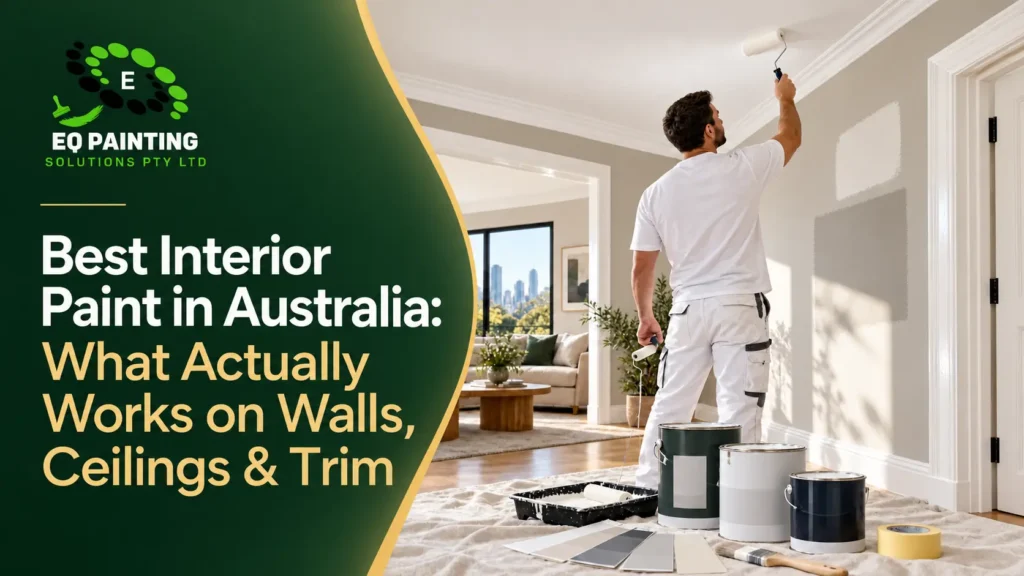
Walk into any Melbourne paint aisle and you’ll find a wall of tins that all promise the same thing. On site, the difference usually shows up six months later — in a south-facing bedroom in Brunswick that never quite dried between coats, or a hallway in Richmond that scuffs every time a school bag brushes past. If you’re trying to pick the best interior paint in Australia, the honest short answer is this: a premium, washable low-sheen on the walls, a dedicated flat on the ceilings, and a water-based enamel on the trim — matched to how each room is actually used, not just how the swatch looks under shop lighting.
After 15 years painting homes across Melbourne, we’ve found the tin matters less than the pairing: right product, right finish, right prep. This guide walks through exactly that, surface by surface, with the local detail the national roundups skip. If you’d rather hand the whole thing over, our interior house painters in Melbourne can spec it room by room — but you’ll get more out of the quote if you read on first.
What “Best” Actually Means for Interior Paint
There is no single best interior paint — there’s the paint that matches the surface, the traffic and the room. Before you compare brands, these are the five things that decide whether a finish looks good on handover and still looks good two years later:
- Coverage: good-quality paint often gets solid coverage in two topcoats over a properly prepared surface, while cheaper formulas or a dramatic colour change can need an extra coat.
- Washability: can you wipe off fingerprints and scuffs without polishing a shiny patch into the wall?
- Durability and colour retention: does it still look even after a couple of years of normal life?
- The right finish for the surface: walls, ceilings and trim each want a different sheen (more on that below).
- Low-VOC where it counts: bedrooms, nurseries and closed-up rooms in a Melbourne winter.
Premium paint usually earns its place on walls you live with every day. But it isn’t always the answer — and we’ll be straight about where a mid-tier tin does the job just as well.
Best Paint for Interior Walls
For most interior walls in Melbourne homes, a premium washable low-sheen acrylic is the best choice — arguably the best paint for interior walls in Australia once you factor in our climate and everyday wear. It balances stain resistance, a soft non-glare sheen and imperfection-hiding, and it stands up to everyday cleaning. Dulux Wash&Wear Low Sheen, Haymes Ultra Premium Low Sheen and Taubmans Endure are the products we reach for most.
One thing that trips up homeowners: in Australia, “low sheen” is closest to what many overseas guides call eggshell. Satin is generally a little shinier, and local brands mostly keep the “satin” label for enamel trim paints. So if you want that soft, washable Australian wall finish, low sheen is usually the safer starting point — not satin.
For high-traffic zones — entry halls, kids’ rooms, the walls near a Hawthorn staircase — step up to a scrubbable formula like Taubmans Endure or Wattyl I.D Advanced, or move to a satin. If your rooms swing between muggy and dry, finish choice matters even more; our honest take on matte or satin for humid Australian homes goes deeper than we can here.
Best Ceiling Paint in Australia (and Why It’s Not the Same Tin)
Ceilings need a dedicated flat ceiling paint, not leftover wall paint. Flat has almost no sheen, so it hides plaster imperfections, kills glare from downlights, and doesn’t spatter as badly overhead. Wattyl Ceiling Paint and Dulux Ceiling are both built for exactly this.
Using wall paint on a ceiling is one of the most common DIY regrets we’re called in to fix — the low-sheen catches the light and shows every roller lap and bump. For the full cost, prep and product breakdown, see our ceiling painting Melbourne guide.
Bathroom and laundry ceilings are the exception: don’t use a standard flat there. A low-sheen or bathroom-specific formula resists the steam and mould that plague closed wet areas — the same logic behind mould-resistant paint on the walls.
Best Paint for Trim, Doors and Skirting
For trim, doors, architraves and skirting, a water-based enamel in satin or semi-gloss is the practical pick. Products like Dulux Aquanamel or Wattyl Aqua Trim dry hard, resist knocks and fingerprints, and — unlike the old solvent-based enamels — don’t yellow over time on a white door.
The catch with a sharper trim finish is that it shows every flaw underneath. Filled nail holes, sanding scratches and old drips all telegraph through gloss, which is why prep does more for the result than the brand does. If you’re doing it yourself, don’t skip the wall preparation stage.
Wet Areas, Humidity and Melbourne’s Slow-Drying Winters
Here’s the part the national guides leave out: Melbourne’s climate changes how paint behaves. In a cold, damp July, a coat that would be touch-dry in 20–60 minutes over summer can take two hours or more, and south-facing rooms that barely see the sun stay damp longest. Rushing the recoat in those conditions is how you get a soft, patchy finish.
A few realistic numbers to plan around:
- Touch-dry: often around 20–60 minutes, depending on the product and conditions.
- Recoat: many interior acrylics specify around two hours — always follow the product data sheet and allow longer in cold or humid weather.
- Before washing: some premium wall paints recommend around seven days for the film to fully cure.
In bathrooms, laundries and poorly ventilated kitchens, a dedicated kitchen-and-bathroom coating such as Dulux Wash&Wear Kitchen & Bathroom is usually the safer choice — it adds extra resistance to moisture, mould and mildew compared with a general-purpose interior wall paint.
Not sure your rooms will dry evenly through a Melbourne winter, or which formula belongs where? A quick on-site look sorts it fast — get a free painting quote and we’ll spec the right system for each room before a lid comes off.
Is Premium Interior Paint Worth It?
For walls in rooms you actually live in, premium paint is usually worth it. Better coverage often means two coats instead of three, and a harder-wearing finish means longer between repaints — so the extra cost per litre tends to pay for itself in labour and time.
But we’ll be honest about where it doesn’t matter as much. On a ceiling, or in a rental you plan to refresh every couple of years, a solid mid-tier paint is perfectly fine — you’re not scrubbing a ceiling or living with a rental’s walls for a decade. Spend where the wear is.
Dulux vs Haymes vs Taubmans vs Wattyl: Which Should You Choose?
Since the title promises the best interior paint, here’s a quick orientation on where each major Australian brand tends to fit for interior work. For the full brand-by-brand breakdown, see our guide to the best paint brands in Australia.
| Brand | Best suited to | Example product |
|---|---|---|
| Dulux | General family homes, washable walls | Wash&Wear |
| Haymes | Premium interior finish and coverage | Ultra Premium |
| Taubmans | High-traffic, durable interiors | Endure |
| Wattyl | Wall, ceiling and trim systems | I.D Advanced / Aqua Trim |
These are products we commonly specify or see on Australian homes — EQ Painting Solutions isn’t sponsored by any of these brands.
Interior Paint by Surface: Quick Reference
| Surface | Finish | Why | Products we use |
|---|---|---|---|
| Living rooms and bedrooms | Low sheen | Washable, soft, hides minor bumps | Dulux Wash&Wear, Haymes Ultra Premium |
| Hallways and kids’ rooms | Low sheen or satin | Scrubbable for high traffic | Taubmans Endure, Wattyl I.D Advanced |
| Ceilings | Flat / ceiling paint | No glare, hides imperfections | Wattyl Ceiling, Dulux Ceiling |
| Bathrooms and laundries | K&B low sheen / semi-gloss | Resists steam and mould | Dulux Wash&Wear Kitchen & Bathroom |
| Trim, doors and skirting | Water-based enamel (satin/semi-gloss) | Hard-wearing, non-yellowing | Dulux Aquanamel, Wattyl Aqua Trim |
A Simple Way to Choose Before You Buy
If you only remember one thing, remember to match the finish to the surface. Run through this before you pay at the counter:
- Pick the finish by surface: low sheen on walls, flat on ceilings, enamel on trim.
- Buy a dedicated ceiling paint — don’t stretch wall paint upward.
- Choose the right undercoat for what you’re painting over (bare plaster, timber, or a strong old colour).
- Budget for two topcoats, not one — most colours need it.
- Go low-VOC in bedrooms and kids’ rooms; our notes on low-VOC interior paints explain when it’s worth it.
- Work out your quantities first so you don’t run short mid-wall — here’s how much paint you’ll need.
- Never skip prep. The best tin in Australia can’t cover for a bad surface.
Related Articles
If you’re planning an interior repaint, these guides go deeper on the decisions above:
Frequently Asked Questions
The Real Takeaway
The best interior paint in Australia isn’t a single tin — it’s the right product in the right finish, prepped properly, for the way each room in your home actually gets used. Get the pairing right and a premium low-sheen on the walls, a flat on the ceilings and a hard enamel on the trim will look sharp for years, even through a damp Melbourne winter.
If you’d rather not stand in the paint aisle second-guessing yourself, that’s what we’re here for. EQ Painting Solutions paints homes across Melbourne — from Fitzroy and Brunswick terraces to family homes in Hawthorn, Glen Iris and Brighton — and we’ll match the product and finish to your rooms before we start. Free quotes across Melbourne. Call 0498 200 654 or request your free painting quote today.