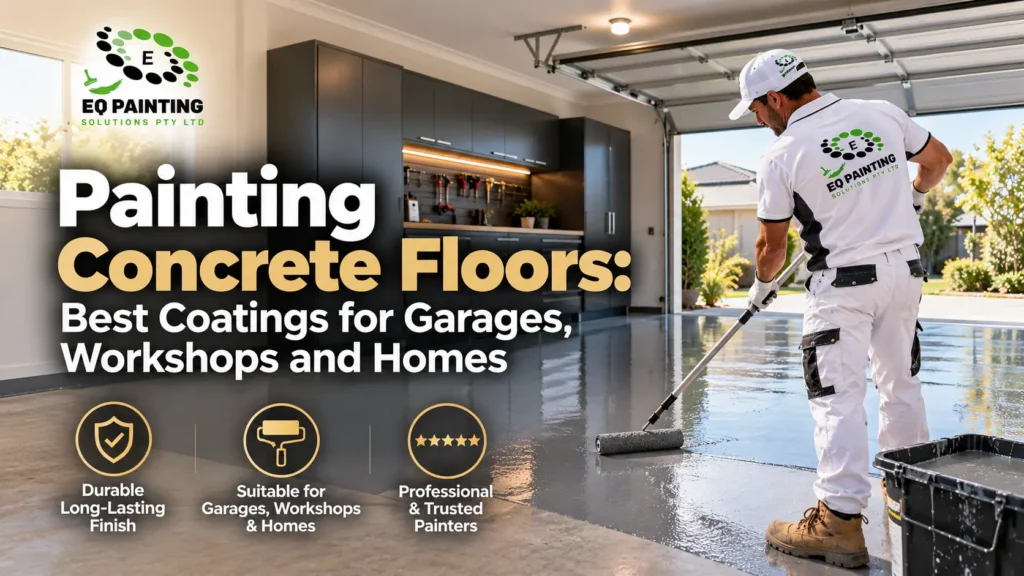
Most concrete floors do not fail because someone picked the wrong paint. They fail because the slab was coated the same afternoon it was swept, with no profiling, no primer and no idea whether moisture was still rising through it. If you are planning to paint a garage, workshop or interior concrete floor, the honest short answer is this: the coating you choose matters far less than how the slab is prepared and which product suits the traffic it will take. For a plain, lightly used floor an acrylic concrete paint is fine; for a garage that sees car tyres and dropped tools, an epoxy or polyurethane system earns its keep. This guide walks through the three coating types, how to prep an old slab properly, primers, drying times and finish — so you choose once and it holds. If your floor is specifically a garage, our guide to garage epoxy flooring in Melbourne goes deeper on that one job.
Which Coating Suits Your Concrete Floor
The right product comes down to how hard the floor will be used. In plain terms: acrylic for light-duty and budget jobs, epoxy for garages and workshops, polyurethane where there is UV, chemicals or heavy knocks. Here is how the three compare for an Australian home or small commercial slab:
| Coating | Best for | Trade-off |
|---|---|---|
| Acrylic concrete paint | Light-traffic floors, laundries, patios, budget jobs | Cheapest and easiest, but wears faster and needs recoating sooner |
| Epoxy | Garages, workshops, floors that take tyres and tools | Hard, chemical-resistant and long-lasting, but needs proper prep and can chalk in direct sun |
| Polyurethane | UV-exposed areas, chemical zones, high-impact floors | Tough and UV-stable, often used as a topcoat over epoxy, costs more |
A common and durable approach for a serious garage floor is an epoxy base with a polyurethane topcoat — the epoxy for adhesion and hardness, the polyurethane for UV and abrasion. If you are weighing coating against grinding the slab back instead, our comparison of epoxy flooring versus polished concrete lays out that decision. Whichever you pick, the prep underneath decides whether it lasts.
How to Prepare a Concrete Floor Before Painting
Preparation is where almost every failed concrete floor goes wrong. A coating can only grip a slab that is clean, sound, dry and slightly profiled — paint over a sealed, dusty or damp floor and it peels in sheets within months. The core sequence is the same whether you are rolling acrylic or laying epoxy:
- Clean it properly — sweep, then degrease. Oil and tyre marks in a garage must be lifted, or the coating lifts with them.
- Check for moisture — do a basic moisture check first. A taped plastic-sheet test left down overnight can flag obvious moisture, but a slab with suspected damp issues may need proper moisture testing before an epoxy or other low-permeability coating is applied.
- Profile the surface — mechanically grinding the slab is generally the preferred method for high-performance coatings, giving the coating a key to bite into. Some products allow chemical etching instead, so follow the coating manufacturer’s preparation requirements. Either way, a glassy trowelled floor will reject paint.
- Repair and fill — patch cracks, spalls and pitting before coating, not after. For structural cracking or crumbling edges, see our concrete repair in Melbourne page first.
- Let it dry — a new slab needs to cure for around 28 days before any coating goes near it.
Skip any one of these and the best epoxy on the market will still fail. Get them right and a suitable acrylic system can perform well in the right low-traffic application. Once the slab is ready, the primer is what locks everything together.
Primers: What Goes On an Old or Bare Slab
A primer gives the top coats something to bond to and seals a porous or thirsty slab so it does not drink the first coat unevenly. On a bare or old concrete floor, a dedicated concrete or epoxy primer is worth the extra step — it evens out absorption, improves adhesion, and on an older slab helps bind any remaining surface dust after grinding. Epoxy systems usually come with their own matched primer; for acrylic paints, a water-based masonry sealer or concrete primer does the job. The one thing to avoid is coating straight over a shiny old sealer — strip or grind it first, or nothing new will stick.
Finish, Non-Slip and Drying Times
Two practical choices are left once the coating is picked: finish and grip. Concrete floor coatings come in matte through to high-gloss; gloss looks sharp but shows tyre marks and can be slick when wet, which is why garages and wet areas usually get a satin finish plus a non-slip additive broadcast into the top coat. Drying times vary by product and by Melbourne’s weather — most concrete floor paints are touch-dry in a few hours but need a full day or more before foot traffic, and up to a week of curing before you drive a car onto an epoxy floor. Winter humidity slows all of this, so plan the job around the forecast, not the weekend.
What About Concrete Floors Inside the Home?
Interior concrete floors are increasingly left exposed and coated rather than covered, and a low-sheen epoxy or polyurethane system can give a utility room, laundry or converted space a clean, polished-look finish that wipes down easily. The trade-offs are different from a garage, though: indoors you are weighing appearance and sheen, how slippery the floor feels underfoot, and comfort, alongside the same moisture checks — a ground-floor slab with any rising damp needs that sorted before a low-permeability coating goes down. For a living area where you want the ground-polished look rather than a painted one, our comparison of epoxy flooring versus polished concrete is the better starting point.
DIY or Call a Painter
A small, lightly used floor in good condition is a reasonable weekend acrylic job if you respect the prep. Where it is worth calling a painter is the slab that fights back: a glassy trowelled finish that needs grinding, a floor with moisture problems, oil-soaked garage concrete, or a large commercial area where an uneven epoxy pour is expensive to redo. For bigger or high-traffic floors, especially commercial ones, a professionally applied system lasts longer and comes with the right surface prep gear. If you want a straight answer on which coating suits your slab, you can book a free on-site assessment and we will tell you honestly whether it is a DIY job or not. For detailed pricing on epoxy specifically, our epoxy flooring cost guide for Melbourne breaks down the numbers.
Related Articles
If you are planning a concrete floor project, these guides from our site go deeper on specific parts of the job:
Frequently Asked Questions
Getting It Right the First Time
A painted concrete floor is one of those jobs where the visible part — rolling on the colour — is the easy 20 percent, and the preparation is the 80 percent that often decides whether the coating performs for years or starts failing prematurely. Pick the coating for the traffic, prepare the slab properly, prime a bare floor, and respect the drying times, and a suitable system will hold up well. Rush the prep and no product will save it. If you would rather have the slab assessed before you commit — especially a garage, a large area or a floor with moisture or oil issues — book a free on-site assessment and we will give you a straight answer on the right coating and whether it is a DIY job. Free quotes across Melbourne — call 0498 200 654.