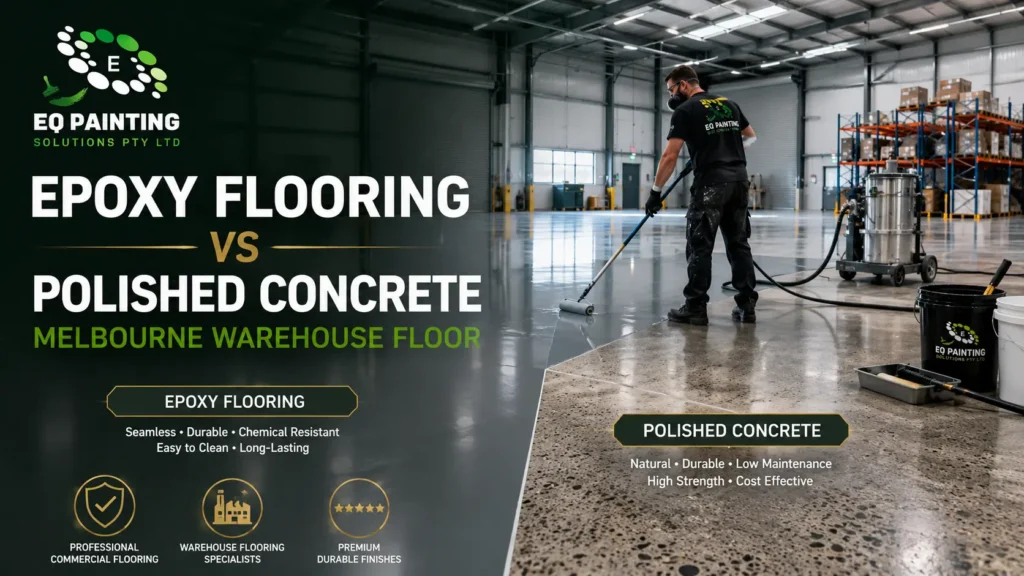
A workshop owner in Deanside rang us last month with a question we’re hearing more often from trade and commercial clients: epoxy flooring vs polished concrete, which one actually makes sense for a working floor? He’d had three quotes and three different opinions, and no clear answer. Fair spot to be in — both floors look sharp, both hold up to daily traffic, and whoever’s quoting tends to recommend whatever they install.
Here’s the short version before we get into it: epoxy generally wins on chemical resistance, upfront cost and colour options, while polished concrete wins on long-term lifespan and a lower-maintenance natural finish. Which one’s “better” comes down to what’s actually happening on that floor — forklifts, oil, food prep, foot traffic, or all of the above. We install epoxy flooring systems across Melbourne every week, from home garages to western-suburbs warehouses, and this guide breaks down where each system earns its keep so you can read a quote properly and pick the right one.
Epoxy Flooring vs Polished Concrete: The Short Answer
Epoxy flooring is generally the stronger pick for chemical resistance, lower upfront cost and colour customisation, which suits garages, workshops and food-prep areas. Polished concrete typically lasts longer between major works and needs less recoating, which suits large industrial floors and showrooms where a natural, low-maintenance finish matters more than chemical protection.
How Epoxy and Polished Concrete Actually Compare
Here’s how the two stack up across the factors that actually matter on a working floor, not just in a showroom sample.
| Factor | Epoxy Flooring | Polished Concrete |
|---|---|---|
| Typical lifespan | 10–20 years before recoating | 20+ years, occasional re-polish |
| Chemical resistance | Excellent — built for oil, acid, solvents | Moderate — can stain without sealing |
| Upfront cost | Lower, especially for smaller floors | Generally higher per m² to grind and densify |
| Maintenance | Mop and occasional recoat | Mop and periodic re-polish |
| Look and customisation | Wide range of colours, flake, metallic finishes | Natural, glossy or matte, limited colour control |
| Install downtime | Usually 2–4 days including cure time | Often longer where the slab needs grinding back |
Durability: How Long Each Floor Actually Lasts
A properly installed epoxy floor holds up for 10 to 20 years, resists oil and hot tyres, and wipes clean with a mop — the key word being “properly installed.” Skip the prep and it can fail within a year, which is where epoxy gets its occasional bad reputation. Polished concrete, because it’s the existing slab ground back and densified rather than a coating sitting on top, tends to go the distance with less drama — decades of service with an occasional re-polish rather than a full recoat.
That durability gap narrows fast once heavy chemical exposure enters the picture, which is where epoxy pulls back ahead — more on that below.
What You’ll Actually Pay in Melbourne
Epoxy flooring in Melbourne typically runs $45 to $120 per square metre installed, depending on the coating system and how much prep the slab needs — a full breakdown of the systems and what changes your quote is in our epoxy flooring cost guide. Polished concrete generally sits at a higher price point per square metre once you factor in the diamond grinding, densifier and multi-stage polishing labour, particularly on an older slab that needs heavy grinding to open it up. Where polished concrete tends to claw that back is over the following 10 to 20 years, when an epoxy floor is due for a recoat and a polished floor usually just needs a light re-polish.
If you’re weighing this up for a specific space, the honest answer depends on your slab condition and how the floor gets used day to day — that’s worth a proper look before you commit either way. Our team is happy to walk your floor and give you a free, no-obligation quote that spells out exactly what’s driving the number.
Chemical Resistance and Everyday Cleaning
This is where the two systems really part ways. Epoxy is built to shrug off oils, acids, solvents and harsh cleaning agents, which is why it’s the default in mechanical workshops, factories and commercial kitchens where spills are a daily event. Polished concrete handles general foot traffic and light cleaning fine, but it’s more vulnerable to staining from oil or chemical spills unless it’s properly sealed, and a sealer needs reapplying over time to keep that protection up.
For anywhere handling oil, brake fluid, food acids or industrial chemicals on a regular basis, epoxy is the safer long-term call. For a showroom, office or retail floor where the biggest daily risk is a spilled coffee, polished concrete holds up just fine.
Which Floor Actually Suits Your Space?
Rather than a blanket answer, here’s how it usually plays out by space:
- Home garage or shed: Epoxy, almost every time — lower cost, resists tyre marks and oil, and the colour and flake options suit a domestic budget.
- Trade workshop: Epoxy, for the chemical resistance alone. A mechanic’s or panel shop floor sees more oil and solvent exposure than almost any other space.
- Warehouse or logistics floor: Depends on load and chemical exposure. Heavy forklift traffic with minimal chemical spill risk can suit polished concrete’s long-term durability; sites handling fuel, oils or industrial product usually do better on a commercial epoxy build-up.
- Commercial kitchen or food-prep area: Epoxy, for hygiene and chemical resistance — it’s also easier to specify a slip-resistant finish where it’s needed.
- Showroom, reception or retail floor: Polished concrete usually wins here — the natural finish reads as premium and the maintenance is minimal where there’s no serious chemical exposure.
A Practical Checklist Before You Choose
- What’s actually going to sit or spill on this floor — oil, chemicals, food, or just foot traffic?
- Is the budget weighted toward the lowest install cost, or the lowest cost over 15–20 years?
- Has the slab been tested for moisture, especially if it’s an older Melbourne building on ground level?
- Do you need a specific colour, flake, or branding element in the floor, or is a natural finish fine?
- How much downtime can the space afford while the floor’s being installed?
Related Articles
If you’re planning flooring or a wider commercial project, these guides are worth a read:
- Epoxy Flooring Melbourne — our full epoxy flooring service and finishes
- How Much Does Epoxy Flooring Cost in Melbourne? (2026 Guide) — the full price breakdown by system and garage size
- Concrete Repair Melbourne — fixing cracks and pitting before any coating goes down
- Commercial Painters Melbourne — our wider commercial and industrial services
Frequently Asked Questions
Getting the Right Floor for Your Space
Neither floor is the universally “better” one — epoxy earns its keep wherever chemicals, oil or budget are the priority, and polished concrete earns its keep wherever long-term durability and a natural finish matter more. Most Melbourne garages, workshops and commercial kitchens land on epoxy. Showrooms and low-chemical-exposure spaces often do better with polished concrete.
If you’re still weighing it up, walk us through what the floor actually needs to handle and we’ll give you a straight answer, not just a quote for whatever we happen to install. Free quotes across Melbourne — call 0498 200 654 or get in touch through our quote page.