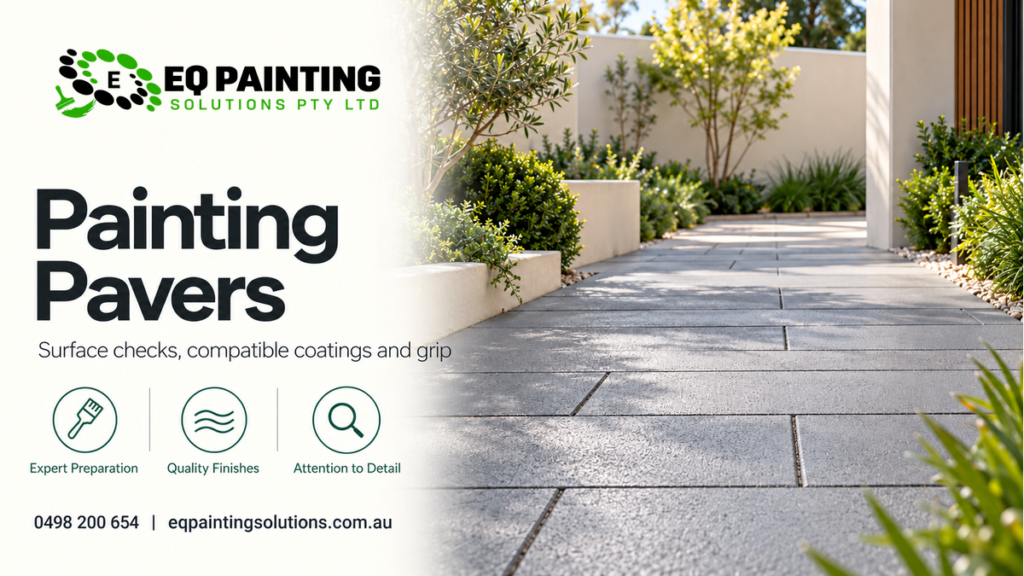
Yes, many sound pavers can be painted with a coating specifically approved for their material and use. Painting pavers requires checking the existing sealer, moisture, surface condition and slip resistance before preparation begins. Concrete, clay brick and natural stone need different decisions, and a coating will not stabilise loose pavers or correct drainage problems.
A faded courtyard may need cleaning, a compatible colour coating or a different treatment altogether. Start with the paving itself rather than a colour chart. If you are planning a wider outdoor refresh, our exterior painting service in Melbourne is the place to discuss the surfaces and scope.
Is painting pavers a good idea for your surface?
Painting can suit sound, stable paving when you want a more uniform colour and are willing to maintain a coating. It is a poor starting point for pavers that rock underfoot, areas that stay wet, or a surface with an unidentified failing sealer. Resolve those conditions before deciding whether a coating is suitable.
Walk through the area and note its use: an occasional garden path, a busy front entrance, pool surrounds and vehicle access place different demands on the finish. Record any steps, slopes, shaded corners and water pooling. A product described as suitable for paving may still have limits for those situations.
- Concrete pavers: confirm that the selected system covers concrete-based paving, including its preparation and moisture requirements.
- Clay or brick pavers: check their actual material and surface finish. Red colour alone does not identify clay, concrete or an earlier coating.
- Sandstone, limestone, bluestone or other stone: ask for approval for that exact stone and its condition. A concrete preparation method is not automatically suitable.
- Glazed, porcelain or very dense paving: obtain a specific coating specification rather than assuming ordinary paving paint will bond.
Keep the paver joints in the assessment. Missing joint material, movement or displaced units can require a paving specialist. Painting across the top does not replace that work, and filling every joint with coating is not a repair method.
Should you paint, stain or seal the pavers?
Choose the result you want before selecting the product. An opaque paving coating changes the colour and hides more of the original variation. A suitable stain may retain more of the surface character, while a clear sealer is chosen when you want to retain or enhance the existing appearance.
These names do not tell you everything about how a product behaves. Some sealers form a film, some products penetrate, and a coloured sealer can function as an opaque finishing coat. Read the technical description, approved substrates and recoating instructions rather than treating every stain or sealer as interchangeable.
A clear product will not reliably turn red pavers grey. A coloured finish may do that when its system is approved, but the original texture, joints and surface defects will still affect the result. Cleaning alone is worth assessing before committing to a colour change.
What paint should you use on outdoor pavers?
Use an exterior trafficable coating system approved for the paver material, existing finish and intended traffic. Ordinary wall paint or craft acrylic paint should not be treated as a paving system simply because it sticks to a small sample.
Product examples show why the complete specification matters. Dulux Concrete & Paving separates preparation for bare concrete from preparation for sealed surfaces. Its Coloured Sealer Satin is a finishing coat used over the specified Stage 2 primer; it is not a standalone substitute for those preparation stages.
Berger Jet Dry Non Slip Flat is an example aimed at surfaces such as paths, paving, steps and pool surrounds. Vehicle access needs a product that separately permits driving and parking. A finish chosen for a pedestrian courtyard does not automatically suit a driveway.
These are manufacturer examples to explain the decisions, not a statement that EQ uses a particular brand or system on every job. Ask which exact products are proposed and which surface conditions they address.
How do you prepare pavers before painting?
1. Identify the old finish and check moisture
Find out whether the paving is bare, previously painted or clear sealed. Where the manufacturer calls for a water-bead test, it can help assess surface absorbency. Water soaking in is not proof that the paver is dry through, free of all contamination or ready for every coating.
Persistent damp patches, recurring white deposits or water collecting after rain need investigation. Follow the selected system’s moisture checks and acceptance limits. Do not use a waterproofing claim to bypass a drainage or moisture problem; a decorative paving finish may explicitly exclude ponded water.
2. Clean without damaging the paving or joints
Remove leaves and loose debris, then use cleaning products approved for the material and contaminants present. Oil, greasy deposits, algae and cleaner residue can interfere with adhesion. Rinse as directed and allow the paving to meet the coating system’s drying requirements.
Check whether the product requires pressure cleaning and whether that can be carried out without damaging the surface or dislodging joint material. Fragile stone, loose paving and old coatings need particular care. Protect surrounding surfaces, plants and drains and plan how wash water and waste will be contained.
3. Use the preparation route for that material
Do not acid-etch every type of paver. Dulux’s Concrete & Paving guidance limits its etching step to bare concrete and concrete-based pavers; sealed surfaces follow a different cleaning route. Clay, stone and glazed surfaces need their own approved instructions.
If etching, stripping or mechanical preparation is specified, follow the product label and safety data sheet. Use suitable chemical protection and keep other people clear. Where the required preparation is beyond safe DIY work, obtain professional advice rather than improvising a stronger chemical or an aggressive grinding pass.
4. Control dust and check older paint before disturbing it
Grinding or sanding concrete, brick and stone can release hazardous silica dust. WorkSafe Victoria advises effective controls such as on-tool water suppression or suitable on-tool extraction. Manage dust and slurry during cleanup; avoid dry sweeping or blowing processing dust into the air.
Old paint may introduce a separate lead risk, particularly around buildings painted before 1970. Assess suspect coatings before sanding, stripping or pressure cleaning them. A household dust mask does not replace an appropriate assessment, dust controls and correctly selected protective equipment.
Solvent products and spraying add fume, ignition and overspray considerations. Follow the safety data sheet, ventilation and access controls for the actual products and method. Keep children and pets away from preparation, application and the curing area.
5. Confirm repairs, primer and a trial area
Have loose pavers, unstable bedding, damaged units or drainage faults assessed by the appropriate trade. Agree any preparation repairs separately from coating. Once the substrate is suitable, use the primer route specified for the retained surface and finish.
Test the proposed system in an inconspicuous area using the full preparation and coat sequence. Check adhesion as directed by the manufacturer, along with colour, texture and appearance. A quick wet paint dab is a colour check, not a complete compatibility test.
How should you apply the coating and plan drying?
Plan the work so you can leave the area without walking over fresh coating. Mask adjacent materials and use the brush, roller or other application method specified. Apply the required coats at the stated spread rate, keep joints and drainage openings functional, and avoid thick puddles along edges.
Calculate quantity from the paintable area, number of coats and the product’s coverage rate. Texture, porosity and application losses can increase consumption, while primer has its own calculation. Recheck the selected system if the trial area behaves differently from the coverage assumptions.
Choose a Melbourne weather window that meets the product’s air and surface temperature limits and protects the coating from rain or dew for the required period. A mild forecast does not mean sun-heated paving is within the application limit. Shaded paving may also remain damp after other parts have dried.
Touch dry, ready to recoat, ready for foot traffic and ready for vehicles are separate stages. For example, Berger lists a two-hour recoat time for Jet Dry Non Slip Flat, while its Heavy Duty Gloss product page says to wait seven days before driving on that different coating. Neither figure is a universal reopening time for pavers.
Use the exact pack and current technical sheet for your chosen product and allow for the stated weather conditions. If manufacturer instructions differ between documents, clarify them before application. Keep furniture, pots and vehicles off until the applicable return-to-use stage.
Will painted pavers be slippery, especially around a pool?
They can be, so slip resistance belongs in the coating choice from the beginning. Consider wet feet, steps, slopes, algae, leaf litter and how the area is cleaned. A rough-looking paver or a matt finish does not by itself establish that the finished surface is suitable.
Use a system approved for the actual area, with any specified slip-resistant additive, coat build and application method. An additive does not make every coating suitable for every slope or pool edge. Keep the manufacturer’s gradient and use restrictions, and seek a site-specific assessment where the slip risk is uncertain.
For pool surrounds, confirm the exact paver material, wet-use suitability, chemical exposure and curing requirements. Pool surrounds and surfaces permanently under water are different applications. A paving coating is not automatically a pool-lining or waterproofing product.
Do not add a clear topcoat as a routine final step. It can change compatibility and traction. Dulux specifically says its Clear Protective Sealer must not be applied over its water-based Concrete & Paving finishes; any proposed final layer needs explicit approval as part of the system.
How do you choose a colour and maintain the result?
Test a suitable sample beside the home’s brickwork, render, fencing and planting. Compare it in sunlight and shade, and consider how dirt and wear will show on a pale or dark finish. Keep useful texture and visible joints in mind rather than judging colour from a screen alone.
Painting red pavers grey, white or black is a system and coverage decision as well as a design choice. Confirm that the colour can be achieved in the approved coating and allow for the prescribed coat build. Our guide to exterior paint colours can help coordinate the wider exterior.
There is no reliable single lifespan for all painted pavers. Exposure, retained coatings, moisture, traffic, preparation and cleaning all affect maintenance. Use the coating maker’s cleaning method and inspect wear or peeling early instead of automatically pressure stripping or coating over the problem.
What affects the cost, and when should you call a painter?
A useful quote separates area, material, existing sealer, failed coating removal, cleaning, agreed repairs, primer, finish, access and time out of use. Slopes, pool surrounds and vehicle areas may change the specification. Paver replacement, relaying or drainage work should be identified separately where required.
Ask a painter for advice when the old finish is unknown, adhesion has already failed, preparation requires dust or chemical controls, or you need to coordinate several exterior surfaces. Ask a paving or drainage specialist about movement and water collection. No general house-painting rate establishes the price for your paving.
EQ Painting Solutions serves Melbourne and surrounding suburbs. We assess surface problems and agree preparation repairs within the project scope before painting. Discuss your paving material, existing finish and intended use with us so suitability and the proposed work can be confirmed.
Related Articles
These guides cover related surface and coating decisions:
- Painting a Driveway: Paint, Sealer and Epoxy Compared
- Painting Concrete Floors: Coating Options and Preparation
- Primer vs Undercoat: What Each One Does
Serving Melbourne suburbs
For a courtyard, path or wider exterior painting project, we serve homeowners in Caroline Springs, Taylors Lakes, Essendon and Mount Waverley, alongside surrounding Melbourne suburbs. Tell us what the paving is made from and how the area is used so the suitable painting scope can be discussed.
Frequently Asked Questions
Yes, when the pavers are sound and stable and the selected coating system is approved for their material, existing finish and use. Check moisture, preparation and slip resistance first. Paint cannot stabilise loose paving or fix drainage.
Some can be coated, but approval for concrete does not automatically cover clay brick. Identify the paver material and any sealer, then obtain the manufacturer's preparation and coating advice. Do not apply a concrete etching recipe to clay without specific approval.
Possibly, if the retained sealer is sound and the proposed system is compatible. Identify the old finish and use the specified cleaning and adhesion-primer route or approved removal method. A water-bead check alone does not identify every sealer or prove compatibility.
Choose an exterior trafficable coating approved for the actual paving and its use. Paths, vehicle areas and pool surrounds can need different specifications. Ordinary wall paint or craft paint is not a substitute for a suitable paving system.
Use a primer when the selected coating system requires it, and choose the specified type for bare or sealed surfaces. For example, Dulux Concrete & Paving uses separate primer routes for those conditions. A generic primer is not automatically suitable.
It depends on the appearance you want and the products approved for the surface. An opaque coating changes colour more completely; a suitable stain may retain more variation. Read the product description because not every stain penetrates and not every sealer is clear.
Only with a system approved for the exact material and pool-surround conditions, including wet slip risk and any required additive. Confirm chemical exposure, slope limits and curing time. Approval around a pool does not mean approval for permanent immersion.
They can be. Select the finish for wet use where required and follow its slip-resistant application instructions. Dirt, algae, water and the surface slope still affect traction, so a textured appearance is not a safety guarantee.
Not automatically. An extra clear layer can be incompatible or change slip resistance. Use one only when the complete coating system explicitly permits it; some paving ranges prohibit a clear protective sealer over their coloured finishes.
There is no single dependable lifespan for every surface. Preparation, moisture, old coatings, sun, traffic and maintenance affect performance. Follow the selected product's inspection and recoating advice rather than relying on a fixed number of years.
Follow the chosen product's separate recoat, foot-traffic and vehicle instructions. A surface feeling dry is not proof that it can carry furniture or tyres. Weather can change the practical curing period; clarify conflicting instructions with the manufacturer.
A suitable opaque coating may achieve that colour change when approved for the material and old finish. Test the full system in a small area to assess coverage, texture and colour. Select from colours available in the approved product rather than any paint colour chart.
Measure the actual paintable area, multiply by the required number of coats and divide by the product's stated square metres per litre. Allow for texture, porosity and application losses as directed. Calculate primer separately.
The price depends on area, material, existing sealer, preparation, agreed repairs, coating system and access. Pool surrounds or vehicle traffic may alter the work. Request a quote for the confirmed scope rather than treating a general painting rate as a paving price.
Check the paving before committing to a colour
Painting pavers can refresh a suitable surface, but the useful first decision is whether the paving and existing finish will support the proposed system. Confirm the material, preparation, slip resistance and time out of use before starting.
To discuss a project, request a free quote from EQ Painting Solutions or call 0498 200 654. Colour advice is included in the quote conversation. Timing depends on availability, agreed scope and site conditions.