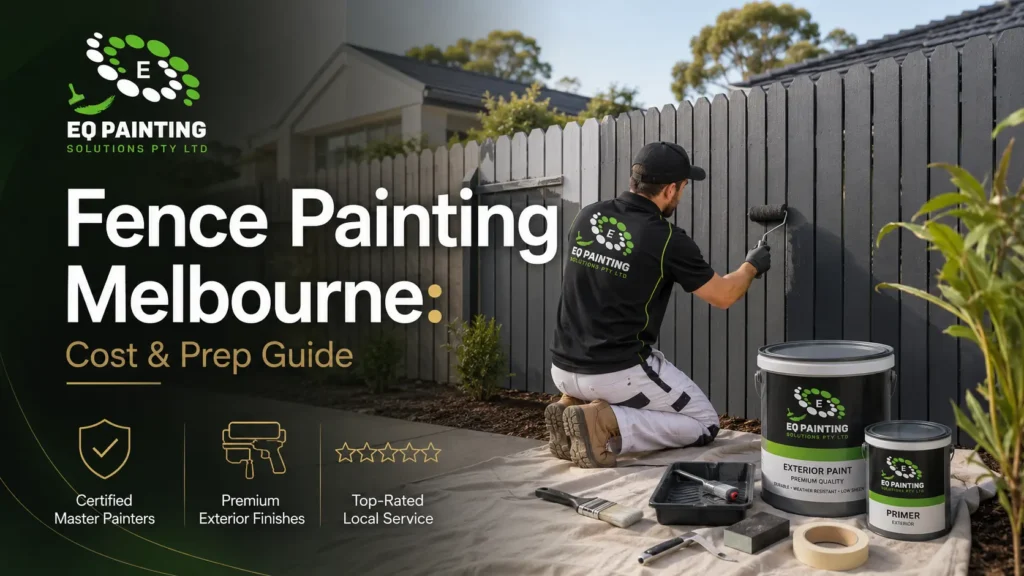
We get the same call a few times a month: someone’s fence has gone from freshly painted to peeling and grey in under two years, and they want to know what went wrong. Nine times out of ten the answer is the same — the fence was painted straight over dirt, moss or old flaking paint with no real prep, because prep is the part that’s invisible in the finished photo but is what actually determines whether the paint lasts five years or fifteen months.
This guide covers what actually drives the cost of fence painting in Melbourne, what proper prep looks like, the difference between painting timber and Colorbond, and the questions worth asking before you book anyone — including us. If you’d rather start with the bigger picture of exterior house painting, fences are usually part of that same job.
What Fence Painting Actually Costs in Melbourne
Prices vary a fair bit depending on who you ask, but the general Melbourne market range for professionally painting a timber paling fence sits around $15–$30 per linear metre, including two coats and basic prep. A standard 30-metre residential fence typically lands somewhere between $450 and $900 on that basis. Colorbond and metal fencing is a different story — painting cost varies far more depending on the existing coating, rust and access, so it’s not something we’d put a fixed range on without seeing it. It also needs an etching primer first, since paint doesn’t grip a factory-finished metal surface without one.
Those numbers move a lot based on three things: how much prep the fence actually needs, how easy the access is (tight side gates, garden beds hard against the fence, a neighbour’s dog on the other side), and whether it’s a single coat refresh or a full two-coat system over bare, sanded timber. A weathered, grey, splitting fence costs more to paint than a fence that’s simply due for a colour refresh — the paint itself is rarely the expensive part, the labour to prepare the surface properly is. We’d rather walk your fence in person and give you an honest number than quote blind off a linear-metre formula — here’s how to get an accurate quote either way.
Why Prep Is the Part That Actually Matters
Melbourne’s weather swings hard within the same week — a 35°C day followed by cold and rain isn’t unusual, and that kind of freeze-thaw, expand-contract cycle is exactly what finds the gaps in a rushed paint job. Painting over moss, dirt or chalky old paint might look fine for the first few months, then the new coat lifts off in sheets because it was never bonded to sound timber underneath.
Proper prep on an older paling fence generally means: a wash down to strip moss, mould and surface dirt; sanding back any flaking or chalking sections; spot-priming bare or repaired timber before the topcoat goes on; and letting everything dry fully before painting starts, which in Melbourne can mean waiting an extra day if there’s been recent rain. Skipping any one of these steps is the single biggest reason a “cheap” fence paint job needs redoing within two years.
Timber vs Colorbond: Different Fences, Different Approach
Timber paling fences are the most common job we see — they take paint well once properly cleaned and sanded, and a quality acrylic exterior paint with UV protection is usually the right call for Melbourne’s sun exposure. Hardwood palings hold paint longer than treated pine, but both need the same prep discipline.
Colorbond fencing is different again. The factory finish is designed to last 15–25 years, so most Colorbond fences never need repainting at all — we’d tell you honestly if yours doesn’t need the job. When a Colorbond fence does need it (usually because of fading, chalking or rust spots after 10–15+ years, especially in bayside areas where salt air speeds up wear), it needs an etching primer and a specialist metal-rated topcoat, not a standard exterior acrylic straight over the top.
Can You DIY a Fence Paint Job?
A small, low fence in reasonable condition is a genuinely doable weekend project if you’ve got the patience for the prep work — sugar soap wash, light sand, a couple of coats with a roller and brush for the edges. Where DIY tends to go wrong is on longer runs, taller fences, or anything with real surface damage: splitting palings, rot, or Colorbond needing primer work most homeowners don’t have on hand. If a job is more than a weekend’s worth of prep, or the fence backs onto a neighbour’s property where overspray and access become an issue, that’s usually the point it’s worth getting a quote rather than losing two weekends to it.
What to Ask Before You Book a Painter
- Does the quote include prep — washing, sanding, spot-priming — or just the paint application?
- Is it a genuine two-coat system, or a single coat “refresh”?
- What paint brand and product are they using, and is it rated for exterior/UV exposure?
- How will they handle overspray or drips onto a neighbour’s side of a shared fence?
- Is the price fixed after they’ve seen the fence, or still an estimate on the day?
| Fence Type | Typical Cost Range | Key Prep Step | Repaint Frequency |
|---|---|---|---|
| Timber paling | $15–$30 per lm | Wash, sand, spot-prime | Every 5–10 years |
| Hardwood fence | $15–$30 per lm | Wash, light sand | Every 7–10 years |
| Colorbond / metal | Varies — ask for a quote | Etching primer | Rarely (15–25 yrs) unless faded/rusted |
Related Articles
Frequently Asked Questions
Pool Fence Painting
Pool fence painting has a couple of wrinkles a standard fence doesn’t. Powder-coated aluminium and steel pool fencing (the most common type in Melbourne) needs a proper etch primer or a specialist direct-to-metal system to bond — ordinary fence paint peels off the smooth coating within a season. Timber pool fences and surrounds cop constant splash, sun and chlorine, so they want an exterior-grade, UV-stable finish. And because pool fencing is safety-regulated, we work around it carefully without removing or altering the barrier. If your pool fence is aluminium, steel or timber and looking tired, we can repaint it — just flag that it’s a pool fence when you book so we bring the right primer for the job.
Get a Straight Answer on Your Fence
Fence painting is one of those jobs where the quote you get depends entirely on the fence a painter actually sees, not a generic per-metre formula. Condition, access and fence type all move the price more than people expect.
If you want an honest look at what your fence actually needs — and a fixed price before any work starts — book a free quote with EQ Painting Solutions. Call 0498 200 654 or get in touch online and we’ll tell you straight whether it’s a simple refresh or a bigger prep job.