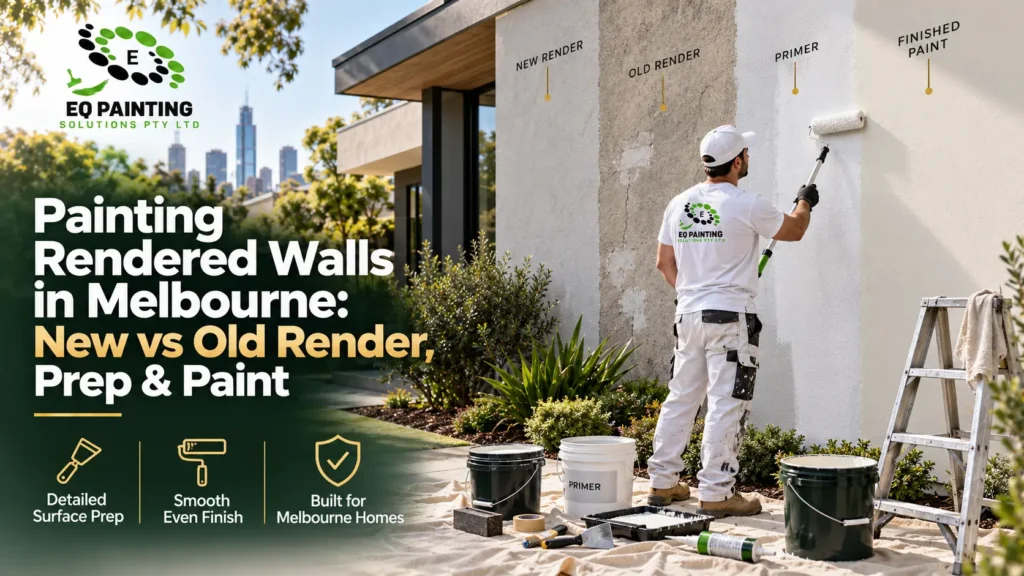
A rendered wall can look brilliant for fifteen years or start flaking in two, and the difference almost always comes down to what happened before the first coat went on. Render painting isn’t the same job as painting weatherboard or brick. A cement render is a porous layer that moves as the ground and the weather move, and the paint sitting on top has to flex with it, breathe with it, and keep water out at the same time. Get the prep and the paint system right and it protects the wall for years. Get it wrong and you’ve sealed a problem in.
This guide is written from a Melbourne painter’s point of view: the specific things that make painting rendered walls tricky in our climate, why a newly rendered wall and a ten-year-old one are two completely different jobs, how to choose the right exterior render paint, and what actually drives the price of a rendered wall paint job here. If you’d rather skip straight to having it done, we offer exterior render painting services across Melbourne.
New Render vs Old Render: Two Different Jobs
The single biggest mistake people make is treating all rendered walls the same. They aren’t.
Newly rendered walls are all about moisture. Water is mixed into render to help it apply and bind, and a fresh surface holds that moisture for weeks. Paint over it too early and you trap water behind the film — which shows up later as bubbling, peeling, or a chalky white bloom called efflorescence. New render also needs time to cure and harden. As a general guide, fresh render often needs around 4–6 weeks to cure before painting, but the exact timing depends on the product, the weather and the manufacturer’s instructions — and it can run longer after a cold, wet Melbourne winter. Rushing this is the number one cause of a fresh render paint job failing.
Older rendered walls are all about repair. By the time a rendered surface is a few years old in Melbourne, it has been through countless expansion and contraction cycles — hot dry summers, cold damp winters, and the ground shifting underneath. Fine cracks form, sections can go hollow or “drummy” where the render has lost its bond with the wall behind, and mould or algae takes hold on the shaded southern side. None of that gets fixed by paint. It has to be cleaned out, filled, repaired and treated first — and badly failed sections may need to be removed, repaired and re-rendered before painting. This is where most of the real work on an older job lives, and it’s usually well beyond a weekend DIY.
How to Prepare Rendered Walls for Painting
Preparation is the part that decides how long the finish lasts — more than the paint brand, more than the colour. On a typical Melbourne repaint, the prep goes roughly like this:
Inspect and sound the wall. Tap across the surface listening for hollow spots. A solid tap is fine; a hollow “drummy” sound means the render has debonded there, and those sections may need to be removed, repaired and re-rendered before anything else.
Clean it properly. On an existing coating, a pressure wash lifts dirt, chalking and pollution film so paint can actually grip. On the shaded southern and eastern walls where Melbourne homes grow mould and algae, that growth has to be treated and killed, not just washed — paint over live mould and it comes straight back through. On fresh, dusty render you skip the water and brush it down dry instead, so you don’t drive moisture back in.
Fill and repair. Hairline cracks can be bridged by a good primer or a flexible filler; wider cracks and damaged sections need an exterior-grade render filler, worked in and sanded back flush. Getting this right is what stops a crack telegraphing back through the new paint a year later.
Prime. A rendered surface is porous and often powdery, especially when new or weathered. A masonry sealer/primer binds that surface and gives the topcoat something stable to hold onto. Skip it on a chalky wall and the paint pulls away with the chalk.
For a deeper look at the prep stage on any exterior surface, see our guide to wall preparation for painting, and on whether the primer step is worth it, do I need to prime before painting.
Best Paint for Rendered Walls in Melbourne
For most rendered homes, a quality exterior render paint means a premium acrylic exterior — they’re flexible enough to move with the wall, breathable enough to let trapped moisture escape, and hold up to UV and rain. On surfaces that already show fine cracking or sit exposed to a lot of weather, a membrane or elastomeric coating is worth considering: it lays down a thicker, more elastic film that bridges hairline cracks and stretches over the wall’s seasonal movement rather than splitting with it. It costs more and takes more product, so it’s a judgement call per wall, not an automatic upgrade.
Whatever the system, it’s applied as a full two-coat job over primer, and the paint is matched to the render — a silicone render, for instance, is happiest under a compatible silicone-based system. Following the manufacturer’s recommendations on coats, drying times and conditions matters more than any brand loyalty.
Why Melbourne’s Climate Is Hard on Rendered Walls
Melbourne asks a lot of an exterior coating. Summer brings strong UV and sudden heat; winter brings weeks of damp and cold; and “four seasons in a day” means a wall can be baked and rained on inside the same afternoon. A cement render expands and contracts through all of that, and the ground beneath many Melbourne homes — a lot of it reactive clay — shifts with the seasons too, which is part of why rendered walls here crack the way they do.
The practical upshots: don’t paint in direct summer sun or when rain is due within a day, because paint that dries too fast or gets rained on before it cures won’t bond properly; give new render its full cure through a wet spell rather than rushing it; and choose a paint system that’s built to flex, because a rigid film on a moving wall is a film that cracks.
What Does Render Painting Cost in Melbourne?
There’s no honest flat rate for render painting, because the paint is the small part — the prep is the variable. Two rendered houses the same size can differ a lot in price depending on: how much crack repair and re-rendering the walls need, whether there’s mould to treat, the height and access (a double-storey job usually needs scaffolding, which adds cost), whether you’re going with a standard acrylic or a pricier membrane system, and how many coats the colour change demands.
As a rough sense of the spread: a small repair-and-repaint on a single wall sits at the lower end, while a full double-storey home with scaffolding and extensive crack repair sits well above it. That’s why a real number only comes from someone looking at the actual walls. Rather than quote a figure that won’t match your house, we come out, sound and inspect the render, and price the prep and paint system your walls actually need. You can see how we approach pricing across jobs in our house painting cost Melbourne guide.
Related Articles
Frequently Asked Questions About Render Painting in Melbourne
Start by sounding the wall — tap across it and listen for hollow "drummy" spots where the render has debonded, and re-bed or patch those first. Then clean the surface: pressure wash existing render to remove dirt and chalking, and treat any mould or algae so it's killed, not just wetted. Fill hairline cracks with a flexible filler or a bridging primer, and use an exterior-grade render filler on wider cracks, sanded flush. Finally, prime with a masonry sealer so the porous render has a stable surface to hold the topcoat. On fresh render, brush it down dry instead of washing, and make sure it has fully cured first.
Most Australian paint manufacturers recommend leaving new render to cure for around 4–6 weeks before painting, and longer if the weather has been cold and wet — which is common through a Melbourne winter. Curing lets the render harden and lets the moisture mixed into it evaporate. Paint over render that's still damp and you trap water behind the film, which later shows up as bubbling, peeling or a white chalky bloom (efflorescence). When in doubt, follow the render and paint manufacturer's guidance and give it the longer end of the range.
For most rendered homes, a premium acrylic exterior paint is the sensible choice — it's flexible, breathable and holds up to Melbourne's UV and rain. On walls that already show fine cracking or take a lot of weather, a membrane or elastomeric coating is worth considering: it forms a thicker, more elastic film that bridges hairline cracks and stretches with the wall's seasonal movement. It costs more and uses more product, so it's a per-wall decision rather than an automatic upgrade. Whatever the paint, match it to the render type (for example a silicone render pairs best with a compatible silicone-based system) and follow the manufacturer's recommendations.
The paint application looks similar, but render behaves differently from timber or brick. Render is a porous cement layer that absorbs paint and moisture, and it moves — expanding and contracting with heat, cold and ground movement. That means render nearly always needs a masonry primer/sealer to bind the surface, more attention to cracks and hollow sections, and a paint system chosen to flex rather than crack. Painting weatherboard is about the timber and the joints; painting render is about the porosity, the moisture and the movement of the wall itself.
Yes, but only after the render is repaired — paint won't fix cracks, it just sits over them and they reappear. Hairline cracks can be bridged with a flexible filler or a quality primer; wider cracks and damaged areas need an exterior-grade render filler, and hollow "drummy" sections need re-bedding or patching so they bond to the wall again. On walls with a lot of fine cracking, a membrane coating over the repairs adds an elastic film that helps bridge future movement. Skipping the repair stage is the most common reason a render repaint fails early.
In almost all cases, yes. Render is porous and often powdery or chalky — especially when it's new or has weathered for years — and a masonry sealer/primer binds that surface so the topcoat can grip. Skip the primer on a chalky wall and the paint pulls away with the chalk. A primer also helps even out how the porous surface absorbs the first coat, giving more consistent coverage. The exception is a sound, previously painted render in good condition, where a primer may only be needed on any bare patches.
As a rule, render is painted as a two-coat system over primer — so primer plus two topcoats. A big colour change, a very porous or patchy surface, or switching to a membrane system can call for extra product or an additional coat. The primer isn't optional filler here; it's what makes the two topcoats perform. Always follow the manufacturer's spread rate and recoat times rather than stretching the paint thin to save a tin.
Aim for mild, dry, settled weather — not the peak of summer and not the middle of a wet winter. Avoid painting render in direct summer sun, because paint that dries too fast doesn't bond well, and avoid painting when rain is due within a day, because a coat that gets rained on before it cures can fail. Melbourne's changeable spring and autumn often give the best windows. For new render, don't rush the 4–6 week cure just to catch a dry spell; a wall painted too early will fail regardless of the day's weather.
There's no single flat rate, because the paint is the small part of a render job — the prep is what varies. Price depends on how much crack repair and re-bedding the render needs, whether there's mould to treat, the height and access (a double-storey render wall usually needs scaffolding), whether you use a standard acrylic or a pricier membrane system, and how many coats the colour change requires. Because of that, an accurate figure only comes from inspecting the actual walls. We come out, sound and assess the render, and quote the prep and paint system your home genuinely needs rather than a number that won't match it.
Get Your Rendered Walls Painted Properly
Render rewards good prep and punishes shortcuts. Whether you’ve got a freshly rendered new build waiting out its cure or a weathered render that’s cracking and growing mould on the shaded side, the job is only as good as the assessment and preparation behind it. At EQ Painting Solutions we’ve been painting rendered homes across Melbourne since 2011 — we sound the render, treat what’s underneath, and match the paint system to your walls and our climate.
For an honest, no-obligation quote based on your actual walls, call us on 0498 200 654 or request a free quote online.