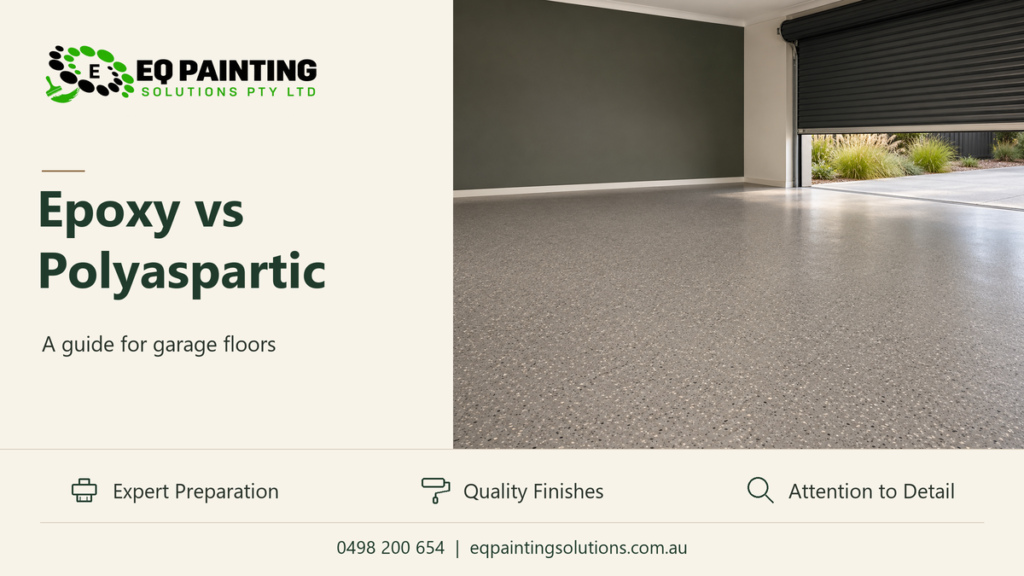
When comparing epoxy vs polyaspartic for a garage floor, start with the coating layers, sun exposure and when you need to park again. An epoxy system can suit a shaded garage. A compatible polyaspartic topcoat may suit a floor that gets sun near the door. If you need quick access, check the vehicle-ready time for the complete system in your conditions.
A quote that says “polyaspartic floor” could describe the topcoat alone or the main coats throughout. If you’re looking at epoxy flooring in Melbourne, ask what will go on your concrete and get the parking date in writing.
When comparing polyaspartic flooring quotes, ask whether the name describes the topcoat or the full coating system. Get the product name for each layer and confirm how the specified build suits your slab, sun exposure and return-to-use needs.
What goes into each garage floor system?
Epoxy is a resin coating commonly used for the base and build coats. Polyaspartic is another resin coating used as a finish or as part of a complete system. A primer, where specified, bonds the coating system to the slab. The base builds the film and may carry decorative flakes. The topcoat is the surface that takes tyres, sunlight and cleaning.
- Epoxy system. The main coats are epoxy. Ask which product forms the wear surface and whether it is suitable for the way you use the garage.
- Epoxy base with a polyaspartic topcoat. Epoxy forms the base and a compatible polyaspartic coat seals the surface or the decorative flakes. Ask for the approved combination, including the primer where required.
- Full polyaspartic system. Polyaspartic is used for the main base and finish coats. The exact build depends on the product and the slab. Ask what is specified as the primer, base and topcoat, and what total dry film thickness the quote allows for.
Coat count is one part of the specification. The concrete’s condition, adhesion, film thickness and curing conditions also affect how the floor handles wear.
Check where the sun falls with the garage door open
A UV-resistant topcoat is worth considering where sunlight regularly reaches the floor. Look at how far direct sun comes through the open door when it’s normally in use. If a strip near the entrance gets sun for hours, ask about the colour layer and the clear finish in that strip.
The Dulux Avista Polyaspartic Sealer data sheet says its UV-resistant clear finish cannot prevent a UV-sensitive epoxy underneath from discolouring. Ask the installer to specify which layers suit your exposure, particularly if the colour would be hard to match later. A garage floor near the door and an exposed driveway can need different specifications.
When can you walk, park and wash the floor?
Get a separate time for walking, parking and washing. Count from completion of the final coat and ask how the schedule changes if the garage is colder than the product’s reference conditions. A one-day installation describes the work schedule. The product and conditions determine when you can put the car back.
- Dulux Avista Polyaspartic Sealer. The data sheet lists foot traffic after 1–2 hours and light vehicle traffic after 24 hours at 20–30°C. Colder conditions can extend those times.
- Sika Sikafloor-264 epoxy. At 20°C, the data sheet lists about 24 hours for foot traffic, four days for light traffic and seven days for full cure. Ask the installer to confirm when those categories allow your vehicle and use.
These are manufacturer examples. For your floor, ask when you can bring in storage, use a jack stand, wash the surface or expose it to oil and cleaners. The coating may be ready to walk on while still curing.
What should you compare on two garage floor quotes?
- Slab and preparation. Ask how the installer will assess old coatings, oil, cracks and moisture. Check what preparation is included and what happens if the slab falls outside the coating manufacturer’s moisture limits.
- Products and layers. Get the name and purpose of each coat, the specified thickness and whether the decorative flakes and clear finish are included.
- Sun and wet grip. Show the installer where sun reaches and where the tyres track rainwater in. Ask which finish and texture are specified and what test information is available for that finish.
- Return to use. Ask for the earliest times for walking, parking and washing. Mention heavy workshop loads if you have them and ask whether site conditions could extend the handover.
If two quotes cover different prep, coat builds or finishes, ask each installer to itemise the work before you compare the totals. For a covered daily-use garage, check the epoxy option against the slab and normal traffic. If sun reaches the entrance or a second parking spot is hard to arrange, compare a suitable UV-resistant finish or faster-return system against your actual needs.
When should you call a floor coater?
Get the slab assessed if an old coating is lifting, a damp patch keeps returning or cracks are moving. Ask about moisture, adhesion and the condition of the concrete before choosing the finish. Concrete grinding can release respirable crystalline silica, and coating products have their own ventilation and safety requirements. Leave mechanical preparation to a suitably equipped professional and follow the installer’s advice on when you can safely re-enter.
Related Articles
These guides cover the choices that go with a garage floor specification.
- Garage epoxy flooring in Melbourne
- Choosing garage floor colours and flakes
- Cleaning and maintaining epoxy flooring
- What affects epoxy flooring cost in Melbourne
Serving Melbourne suburbs
Planning a garage floor as part of a home refresh in Melbourne’s west? See our service-area guides for Caroline Springs, Sunshine and Keilor.
Frequently Asked Questions
A well-specified epoxy system can suit an enclosed garage with limited sun and enough time to cure. Consider a suitable polyaspartic finish or system if sun exposure or a shorter wait to park matters. Compare the complete specification for your slab and how you use it.
It is a resin coating that can form the wear surface of a garage floor. Some systems use it over an epoxy base, while others use polyaspartic for both the base and finish. Ask the installer which product is specified for each layer.
It can in some compatible systems. The installer needs to check the old epoxy’s adhesion, condition and compatibility with the proposed product. A peeling or contaminated coating needs assessment before any new finish goes over it.
Only if the installer confirms the full system is ready for your vehicle under the actual curing conditions. Ask for the earliest parking time measured from the final coat. Foot traffic and full cure have their own timings.
A clear UV-resistant coat can be suitable for sun exposure, but it may still let the underlying epoxy discolour. Ask whether the colour layer and the finish are both suitable where direct sun reaches the floor.
They can be, depending on the texture of the finish and what is on the surface. If rainwater gets tracked in, ask what texture is available and what wet-slip test evidence applies to the finished system. Keep the entrance clear of water and contaminants where practical.
Have the slab assessed first. The installer needs to identify where the moisture is coming from and check the concrete against the proposed system’s moisture limits. A new topcoat cannot fix the source of recurring damp.
There is no single lifespan for this coating type. Slab preparation, the thickness and suitability of the system, sun exposure and traffic all affect wear. Ask which areas are likely to need maintenance first and what a recoat would involve.
Wait until the installer clears the floor for washing, then follow the coating manufacturer’s cleaning guidance. Remove grit regularly and use a compatible cleaner. Ask what to use for tyre marks or spills before applying a strong solvent.
Quotes can include different preparation, repairs, coat builds, flakes, texture and finishes. Ask for a breakdown of the products and prep, plus the parking date after the last coat, so you can compare equivalent work.
Choose the coating for the way you use the garage
Note where sun hits the floor, any signs of damp and the earliest day you need to park again. Use those details to compare the specified layers and the handover dates. For an epoxy garage floor quote in Melbourne, call 0498 200 654 or contact EQ Painting Solutions for a free quote.