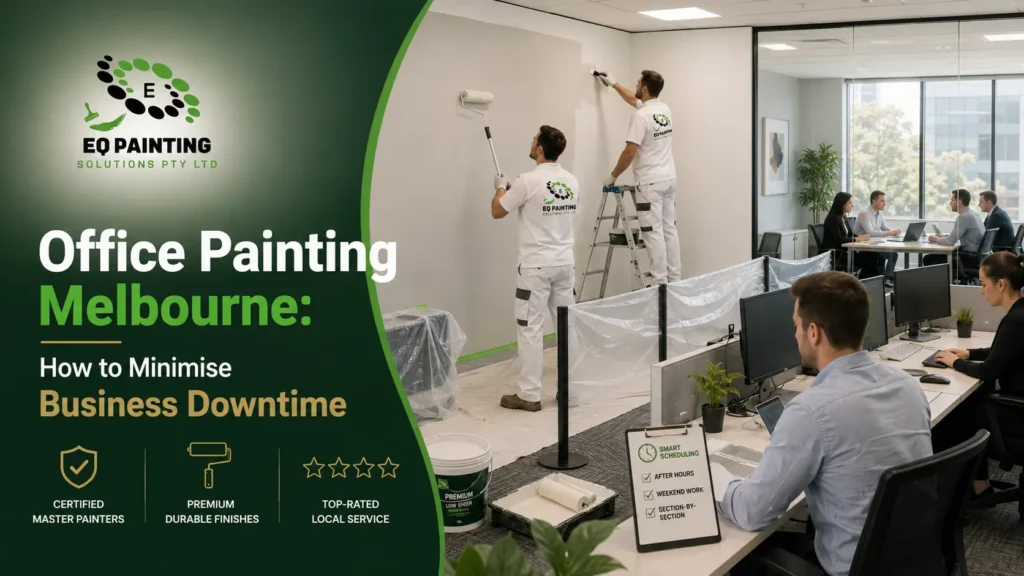
The biggest concern we hear from businesses planning an office repaint usually isn’t the colour — it’s disruption. Few businesses can afford to close part of the workplace for days while painting is underway. The good news is that a well-planned office painting project can often be staged around normal operations, using after-hours work, weekends or section-by-section scheduling. In this guide, we’ll explain how Melbourne offices can reduce downtime during a repaint, including realistic scheduling, paint selection, preparation, safety and the factors that affect how quickly each area can return to use. If you’re after the full service rundown, our commercial painters in Melbourne page covers the wider picture.
How to Keep the Business Running While You Paint
Minimising disruption comes down to scheduling, and there are three ways professional painters handle it:
- After-hours and weekends — the most common approach. We paint in the evenings or on weekends so your team can often return with little or no disruption to normal working hours, though it usually carries a small scheduling premium.
- Staged / sectional — for larger offices, we work one zone at a time behind temporary barriers so the rest of the floor keeps operating. Slower overall, but no after-hours cost.
- Fast-track with quick-dry paints — low-odour, fast-curing coatings that let a space be reoccupied in hours rather than days.
The right mix depends on your floor plan, your hours and your budget. A good painter walks the space first and proposes a schedule built around when your office is quietest — not a generic plan.
What to Do Before the Painters Arrive
A little preparation on your side keeps the job moving and the downtime short. Before the first day, it helps to:
- Decide which areas must stay operational throughout
- Identify any after-hours access requirements
- Move confidential documents and sensitive equipment out of the work zone
- Confirm who controls alarms and building access
- Tell staff which zones will be unavailable and when
- Agree on drying and re-entry times for each area
- Nominate one contact person to liaise with the painter
How Long Does an Office Repaint Take?
For many small to medium office repaints, the work may take anywhere from one to five days, depending on the size of the space, the condition of the walls and the type of coating. A single office or a small suite is often done in one to three days; larger floors, extensive repairs or staged after-hours projects can take longer.
The honest answer is that prep drives the timeline as much as the painting. Marked, patched or previously poorly painted walls need more preparation before a roller touches them — and skipping that is exactly why cheap jobs peel within a year.
A Simple Low-Downtime Office Painting Plan
Here’s how a staged weekend repaint often runs for a single-floor office. This is an example only — actual timing depends on the product, the preparation needed and site conditions:
- Friday evening: protect floors and furniture, mask up and start prep
- Saturday morning: repairs and first coat
- Saturday afternoon: second coat
- Sunday: drying, touch-ups and cleanup
- Monday morning: office ready for normal use
The Right Paint for a Working Office
Office walls take a beating — scuffs from chairs, trolleys, bags and constant contact. For high-traffic areas, a washable low-sheen or satin finish is the practical choice: it wipes clean and hides marks far better than a flat finish, without the glare of a full gloss.
Just as important in an occupied workplace is air quality. Low-VOC and low-odour products can reduce paint odour and emissions, making them a practical choice when spaces need to be returned to service quickly, which is why they’ve become standard for commercial interiors. Our guide to low-VOC paints in Australia explains what to look for.
Colours That Work in a Workplace
Most Melbourne offices anchor on a clean neutral base — greys, warm whites, greige — then use brand colours as feature walls in reception or meeting rooms. Calmer tones suit heads-down work areas, while warmer accents lift collaborative and breakout spaces. If you want to go deeper on how colour affects mood and focus, our piece on colour psychology applies just as well to a workplace.
What Drives the Cost
Commercial quotes vary more than most people expect, and it’s rarely just floor area. The main cost factors:
- Size and number of coats — the obvious one, but a colour change or bare surface adds coats.
- Prep and repairs — patching, filling and sanding marked walls is often the biggest hidden cost.
- After-hours scheduling — evening and weekend work to avoid downtime carries a premium over standard hours.
- Access and height — high ceilings, atriums and stairwells need equipment and add time.
- Surface and finish — durable high-traffic coatings cost more than basic paint but last longer.
Because these vary so much site to site, a fixed price only comes after someone sees the space. Our guide on getting accurate painting quotes explains how to read a commercial quote so you know what you’re paying for.
Safety and OHS Requirements for Office Painting in Victoria
Painting in an occupied workplace needs to be planned around Victoria’s occupational health and safety requirements. That means controlling risks to staff, contractors and visitors, keeping access routes safe, managing equipment and coatings properly, and maintaining a clean, clearly separated work area. WorkSafe Victoria sets out that employers and those managing a workplace have a duty to keep it safe and reduce risks so far as is reasonably practicable.
Before appointing a commercial painter, check that they carry appropriate public liability insurance, have relevant commercial experience, and can explain how they’ll manage site access, safety and disruption. Where a specific licence, registration or permit applies to the work being performed, confirm that it is current. For a fuller sense of how commercial work differs from a home repaint, see our breakdown of the differences between residential and commercial painting.
Why It’s Worth Doing Properly
An office is the first thing clients and staff see, and worn, marked walls quietly signal a business that’s let things slide. A clean repaint lifts the space, supports morale, and protects the surfaces from wear that leads to costlier repairs later. Done right — scheduled around your hours, with the correct paint and proper prep — it’s a small investment that pays off in how your workplace looks and lasts. We paint offices and commercial spaces across Melbourne, from CBD tenancies to business parks in the eastern and western suburbs. If you’d like a plan and a price built around your hours, get in touch for a free quote.
Related Articles
More from our Melbourne painting team:
Frequently Asked Questions
For many small to medium office repaints, the work may take anywhere from one to five days, depending on the size of the space, the condition of the walls and the coating used. A single office or small suite is often one to three days; larger floors, extensive repairs or staged after-hours projects can take longer.
A washable low-sheen or satin acrylic is the practical choice for high-traffic office walls. It wipes clean, resists scuffs from chairs and trolleys, and hides marks far better than a flat finish — without the glare of a full gloss. Durable, high-traffic-rated interior paints hold up best in busy workplaces.
Calmer tones like blues and greens suit heads-down work areas, while warmer neutrals and soft yellows lift collaborative and breakout spaces. Most offices use a clean neutral base — grey, warm white or greige — with brand colours as feature walls in reception and meeting rooms.
Look for appropriate public liability insurance, proven commercial painting experience, clear safety procedures and flexible scheduling. Ask for a written quote, examples of similar office projects and a clear plan for staging, access and working around staff. Where a specific licence, registration or permit applies to the work, confirm it is current.
Painting in an occupied Victorian workplace is planned around the state's occupational health and safety requirements: controlling risks to staff and visitors, keeping access routes safe, and managing equipment and coatings properly. Painters should carry public liability insurance, and the job must be managed so painting never compromises the safety of your staff or the painters on site.
Low-VOC and low-odour paints are the standard eco-friendly choice for offices — they reduce paint odour and emissions, making it easier to return a space to service quickly. Many premium ranges now offer near-zero-VOC options with the durability a commercial space needs, so you don't trade performance for lower emissions.
The main factors are size and number of coats, the amount of prep and repair needed, after-hours or weekend scheduling, access and ceiling height, and the durability of the finish chosen. Prep and after-hours work are the two costs people most often underestimate. A site visit is the only way to get an accurate price.
Premium commercial ranges from Dulux, Taubmans and Haymes are widely used for Melbourne offices because they offer washable, high-traffic-rated, low-VOC options. The right product depends on the surface and traffic level rather than the brand alone — a good painter matches the paint system to how the space is used.
A professional job means proper prep, the right high-traffic paint, and scheduling that keeps your business running with minimal downtime. Beyond a sharper, more professional-looking space, it protects surfaces from wear, supports staff morale, and avoids the peeling and callbacks that come with a rushed or under-prepared job.
A well-planned office repaint can often be completed without costing your business a full working day. With the right scheduling — after-hours, weekends or staged in sections — and low-odour, fast-drying paints, your team returns to a fresh, professional space with minimal interruption to the business. The keys are proper prep, high-traffic paint suited to a working environment, and a contractor who’s properly insured, experienced in commercial work, and plans around your hours rather than theirs.
If you’re planning an office refresh in Melbourne, we’ll build a schedule and a price around your operations. Get in touch for a free quote — free quotes across Melbourne, with after-hours scheduling as standard. Call us on 0498 200 654.
Pingback: How Much Does Commercial Painting Cost in Melbourne? (2026 Guide)
Pingback: Warehouse Painting Melbourne: Safety, Coatings & Cost Guide (2026)